Follow Me On Social Media!

Air Fryer Poached Eggs (Silky, Runny-Yolk Breakfast in 10 Minutes)
Air fryer poached eggs deliver soft whites and runny yolks in ramekins—no simmering pot required. Foolproof method, timing chart, and serving ideas inside.

Air fryer poached eggs are my little kitchen shortcut whenever I want café-style eggs without babysitting a swirling pot of water on the stove. I tuck the eggs into small ramekins with a splash of water, let the air fryer do its gentle steaming magic, and end up with tender whites and dreamy, spoon-through yolks every single time.
Fun fact: the technique of steaming eggs inside individual cups is actually a nod to the old French oeufs en cocotte method, which traditionally uses a water bath in the oven. The air fryer just gives that century-old idea a faster, tidier upgrade.
Why this recipe works
- No pot of simmering water, no vinegar swirl, and no fishing eggs out with a slotted spoon.
- The tablespoon of water inside each ramekin creates gentle steam that mimics true poaching.
- You control the yolk exactly—runny, jammy, or firm—just by adjusting the minutes.
- Cleanup is honestly a rinse of two little cups. That is the whole cleanup.
- It is naturally high in protein and pairs with almost anything sitting in your fridge.
- Perfect for slow weekend brunches or fast weekday breakfasts before the day gets loud.
Ingredients
- 2 large eggs
- 2 tablespoons water, divided (1 tablespoon per ramekin)
- Cooking spray, softened butter, or a small amount of oil, for greasing
- Salt and freshly ground black pepper, to taste (optional)
Instructions
Step 1: Preheat the air fryer
Set your air fryer to 350°F (175°C) and let it warm up for about 3 to 5 minutes. A properly preheated basket helps the eggs start cooking the instant they go in, which gives you cleaner, more even whites.
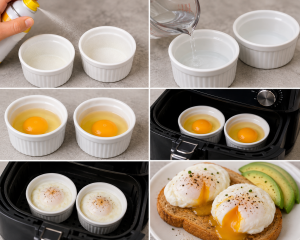
Step 2: Grease your ramekins
Give the inside of each oven-safe ramekin a light coating of cooking spray, softened butter, or a swipe of oil. Do not skip this—it is what lets the cooked egg slide out in one pretty piece instead of clinging to the sides.
Step 3: Add the water and eggs
Spoon 1 tablespoon of water into each ramekin. Crack one egg into a small bowl first (this is my little insurance policy against stray shell), then gently slide it into the ramekin on top of the water. Repeat with the second egg.
Step 4: Air fry the eggs
Carefully set both ramekins into the basket and cook at 350°F (175°C). Use these times as your starting point:
- 5 minutes: barely-set whites, very runny yolk
- 6 minutes: tender set whites with a soft, jammy yolk
- 7 minutes: fully set whites with a slightly firmer yolk
- 8 minutes: mostly firm yolk, still creamy in the center
Step 5: Check for doneness
Give one ramekin a gentle wiggle. The white should look opaque and set, while a runny yolk will still jiggle softly in the middle. If the whites look watery, pop them back for another 30 to 60 seconds and check again.
Step 6: Release and serve
Lift the ramekins out with oven mitts or heat-safe tongs—everything, including that little pool of water, will be very hot. Run a small spoon or silicone spatula around the edge of the egg, tip out the excess water, and slide the poached egg onto your toast, bowl, or plate. Finish with a pinch of salt and black pepper.
Nutrition information
Approximate values per serving (1 egg):
- Calories: 72
- Protein: 6 g
- Fat: 5 g
- Saturated fat: 1.6 g
- Carbohydrates: 0.4 g
- Sugar: 0.2 g
- Sodium: 71 mg (before added salt)
- Cholesterol: 186 mg
Pro tips for the best air fryer poached eggs
- Only reach for oven-safe ramekins. Ceramic, tempered glass, or heat-rated silicone cups all work beautifully; anything else can crack or warp under high heat.
- Let the eggs come to room temperature. Straight-from-the-fridge eggs cook unevenly and often need extra time. I set mine on the counter while the air fryer preheats.
- Test one egg first with a new machine. Air fryers can be moody—wattage, basket size, and airflow all shift the timing. A single test egg saves the whole batch later.
- Pull them a little early. Residual heat keeps cooking the yolk for a minute after you lift the ramekins out, so stop just before your ideal texture.
- Grease more than you think you need. A generous swipe of butter or oil is the difference between a graceful slide-out and a scramble session.
- Play with flavor. Try red pepper flakes and chives, a sprinkle of feta, or a spoonful of pesto—these little eggs are a blank canvas.
Frequently asked questions
Can I cook more than two eggs at once?
Absolutely, as long as each egg has its own ramekin and the cups fit in the basket without touching or blocking the airflow vents. Consistent air circulation is what keeps the cook times reliable.
Why is my egg white still watery in the middle?
It usually just needs another 30 to 60 seconds. Cold eggs, deeper ramekins, or an air fryer that runs a touch cool can all add time. Return it to the basket and check again in short bursts.
Can I skip the water in the ramekin?
You can, but the result will taste and feel more like a baked egg than a poached one. That splash of water is what generates the steam that gives you that classic silky, poached texture.
Do silicone cups work for this?
Heat-safe silicone cups work well. Because silicone conducts heat differently than ceramic, expect to add a minute or so and check the whites before pulling them out.
Are runny yolks safe for everyone?
Most healthy adults enjoy runny yolks with no issue, but anyone who is pregnant, elderly, very young, or immunocompromised should reach for pasteurized eggs or cook the yolks fully through for peace of mind.