Follow Me On Social Media!

Dutch Oven Beef Pot Roast (Fork-Tender Sunday Supper, 3.5 Hours)
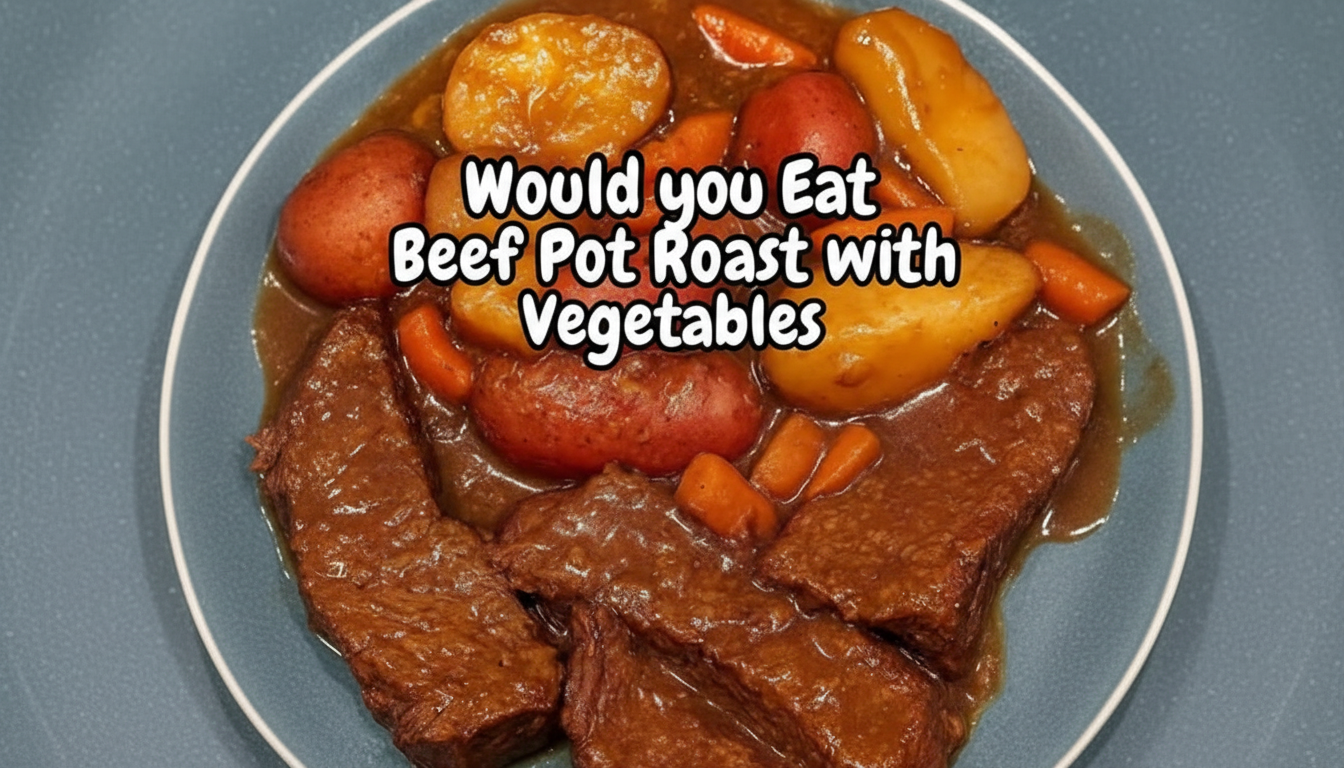
This dutch oven beef pot roast turns a humble chuck into fork-tender beef with buttery potatoes and carrots in a rich, herb-kissed pan gravy.

There is something about a dutch oven beef pot roast bubbling away in my kitchen that makes the whole house feel like a hug. I start it on a lazy Sunday afternoon, and by the time the light turns golden outside, the beef is falling apart under a fork and the carrots and potatoes are drinking up every drop of that savory, wine-kissed broth. It is honestly one of the coziest, most soul-warming dinners I know how to make, and the hands-on time is shorter than you would guess.
Fun fact: pot roast as we know it in America was popularized by German and French immigrant cooks who adapted their braising traditions (think sauerbraten and boeuf à la mode) using inexpensive cuts and whatever root vegetables they had in the cellar. That thrifty, one-pot spirit is exactly why it still feels so nourishing today.
Why this recipe works
- A well-marbled chuck roast slowly melts into ribbons of tender, juicy beef thanks to the low, gentle braise.
- Searing first builds a deep, caramelized crust that turns the pan juices into a rich, complex gravy you will want to spoon over everything.
- Adding the potatoes and carrots partway through keeps them perfectly fork-tender instead of mushy, so every bite has real texture and flavor.
Ingredients
- 3 to 4 lbs beef chuck roast (or shoulder roast)
- 2 tbsp olive oil or vegetable oil
- 1 large yellow onion, quartered
- 3 stalks celery, chopped
- 3 cloves garlic, minced
- 2 cups beef broth
- 1 cup dry red wine (optional; swap in extra beef broth if you prefer)
- 1 can (14.5 oz) diced tomatoes, undrained
- 1 tbsp Worcestershire sauce
- 1 tsp dried thyme
- 1 bay leaf
- Salt and black pepper, to taste
- 1 1/2 lbs small red potatoes (or Russets), halved or quartered
- 1 lb carrots, cut into 1-inch pieces
Instructions
Step 1: Season and sear the beef
Pull the roast out of the fridge and pat it very dry with paper towels; a dry surface is what gives you that gorgeous crust. Season it generously on every side with salt and black pepper. Warm the oil in a large Dutch oven over medium-high heat, then carefully lower the roast in and let it sear undisturbed for about 3 to 4 minutes per side, until each face is deeply browned. Move the beef to a plate and set it aside.
Step 2: Soften the aromatics
Turn the heat down to medium and drop the quartered onion and chopped celery into the flavorful drippings. Let them sizzle and soften for about 5 minutes, stirring now and then. Stir in the minced garlic and cook just until it smells fragrant, roughly one minute, watching closely so it does not scorch.
Step 3: Deglaze and build the braise
Pour in the red wine (or the extra broth) and use a wooden spoon to scrape up all those toasty brown bits stuck to the bottom of the pot; that is pure flavor. Add the beef broth, the undrained diced tomatoes, the Worcestershire, and the dried thyme, then tuck in the bay leaf and give everything a good stir.
Step 4: Braise low and slow
Nestle the seared roast back into the pot along with any juices it left behind, spooning some of the liquid over the top. Bring it up to a gentle simmer, cover with a snug lid, and slide it into an oven preheated to 325°F (163°C). Let it braise undisturbed for about 2 hours.
Step 5: Add the root vegetables
Carefully pull the Dutch oven out and arrange the potatoes and carrot pieces around the beef, pressing them partly into the braising liquid so they soak up all that flavor. Cover again and return it to the oven for another 1 to 1.5 hours, until the vegetables are tender and the meat gives way easily under a fork.
Step 6: Rest and serve
Fish out and discard the bay leaf, then lift the beef and vegetables onto a warm platter. Let the roast rest for about 10 minutes before slicing across the grain or gently pulling it apart with two forks. Ladle the warm pan juices generously over the top and bring it straight to the table.
Nutrition information
- Calories: 465 per serving
- Protein: 42 g
- Carbohydrates: 28 g
- Fat: 20 g
- Fiber: 4 g
- Sodium: 640 mg
Pro tips for the best dutch oven beef pot roast
- Do not skip patting the meat dry before searing; moisture is the enemy of a deep, brown crust.
- Choose a Dutch oven that is just big enough to hold the roast snugly with a little room for the vegetables, so the braising liquid stays concentrated and flavorful.
- If the pan juices taste a bit thin at the end, simmer them on the stovetop for a few minutes to reduce, or whisk in a teaspoon of cornstarch slurry for a silky gravy.
Frequently asked questions
Can I make this pot roast in a slow cooker instead?
Absolutely. Sear the seasoned beef and sauté the onion, celery, and garlic in a skillet, then transfer everything to your slow cooker along with the wine (or extra broth), beef broth, tomatoes, Worcestershire, thyme, and bay leaf. Tuck the potatoes and carrots around the meat, cover, and cook on Low for 8 hours or on High for 5 to 6 hours, until the beef pulls apart easily.
What is the best cut of beef for pot roast?
A well-marbled chuck roast is my top pick, with shoulder roast a close second. Both have the connective tissue and fat that slowly break down during braising, giving you tender meat and a luscious sauce.
Do I really need the red wine?
No, it is completely optional. Wine adds a lovely depth and a little acidity, but you can swap in an extra cup of beef broth (or broth with a splash of balsamic vinegar) and still get a beautifully rich, savory result.
How do I store and reheat leftovers?
Tuck the beef, vegetables, and broth into an airtight container and refrigerate for up to 3 to 4 days; the flavor honestly gets even better overnight. Reheat gently in a saucepan over medium-low heat with a splash of the reserved broth so the meat stays moist.
Can I freeze pot roast?
Yes. Once fully cooled, portion the beef and vegetables with some of the broth into freezer-safe containers and freeze for up to 3 months. Thaw overnight in the fridge and rewarm slowly on the stovetop until heated through.