Follow Me On Social Media!

Chicken Katsu (Crispy Japanese Cutlets, 30 Minutes)
This chicken katsu recipe delivers shatter-crisp panko, juicy chicken, and homemade tonkatsu sauce in about 30 minutes, and it's easier than you'd think.

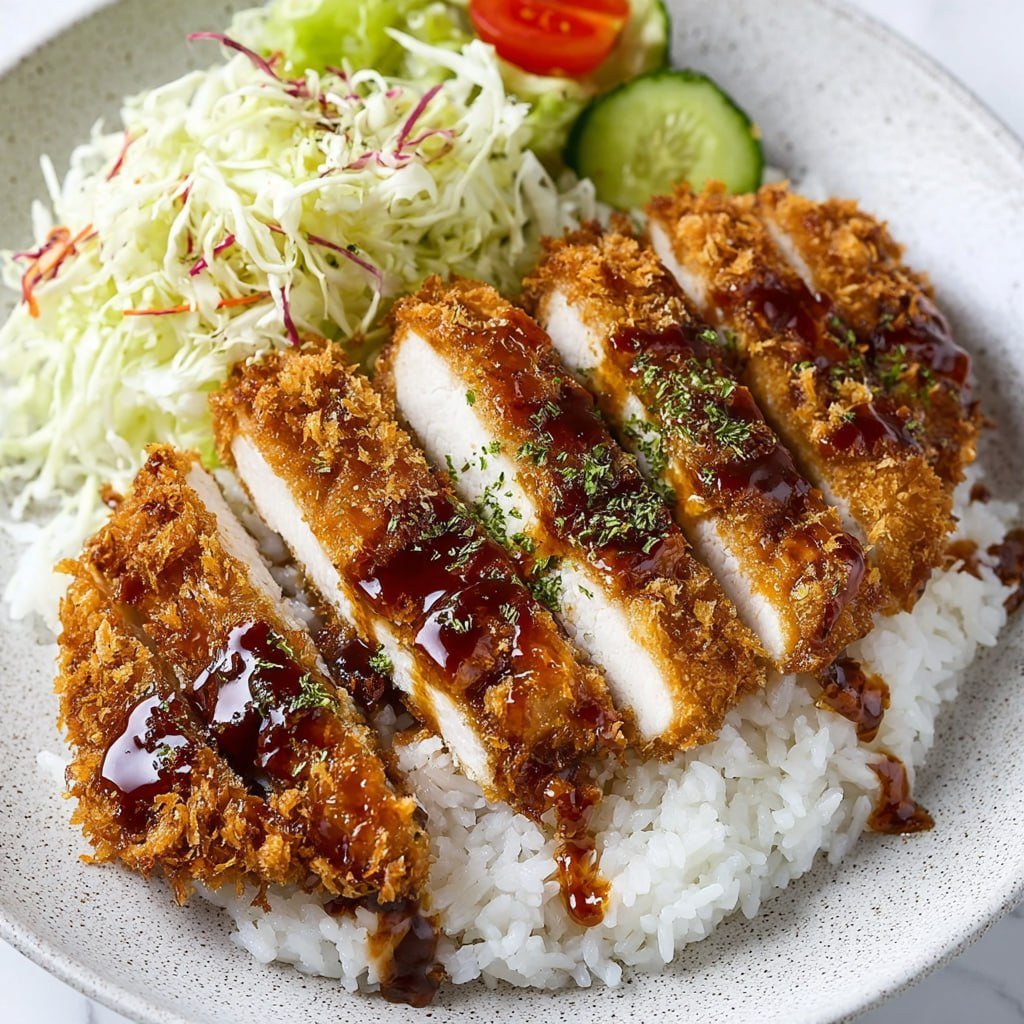
Every time I pull a golden cutlet out of the pan, I’m reminded that chicken katsu is in a league of its own compared to any other breaded chicken I’ve made. The crust actually shatters when you cut into it, the meat underneath stays tender and well seasoned, and the tangy tonkatsu sauce I whisk together in the same time it takes the oil to heat up is genuinely addictive on almost anything. It tastes like something I’d order at a cozy neighborhood spot in Tokyo, yet it comes together on a Tuesday night in my own kitchen without any fussy ingredients.
Fun fact: the word “katsu” is a shortened form of “katsuretsu,” which is Japan’s phonetic take on the English word “cutlet.” The dish was invented in the late 1800s at a Tokyo restaurant called Rengatei as part of the yōshoku (Western-inspired Japanese cooking) movement, and it has been comfort food royalty ever since.
Why this recipe works
- Pounding the chicken to an even half-inch means the outside finishes browning at the same moment the inside reaches perfect doneness — no dry edges, no undercooked centers.
- Pressing the panko into the egg wash with real pressure locks the coating on, so nothing sloughs off and burns in your oil.
- Frying at a steady 350–360°F gives you that signature blonde-gold crust with zero greasiness, because the crumbs seal instantly instead of soaking up oil.
Ingredients
- 2 large chicken breasts (or 4 boneless thighs), pounded to ½-inch even thickness
- Kosher salt and freshly ground black pepper, to taste
- ½ cup all-purpose flour
- 2 large eggs whisked with 2 tablespoons water
- 2 cups panko breadcrumbs
- Neutral oil (vegetable or avocado), enough to fill the pan ½ inch deep
- 4 tablespoons Worcestershire sauce (for the tonkatsu sauce)
- 2 tablespoons ketchup
- 1 tablespoon oyster sauce
- 1 tablespoon soy sauce
- 1½ tablespoons granulated sugar
- 1 teaspoon Dijon mustard
- Shredded green cabbage tossed with a splash of rice vinegar and pinch of salt, for serving
- Steamed short-grain Japanese rice and lemon wedges, to plate
Instructions
Step 1: Pound the chicken evenly
Slip each piece of chicken between two sheets of plastic wrap and gently pound until it measures a uniform ½ inch across. You still want a hearty cutlet with real bite, not something wafer thin that dries out the second it hits the oil.
Step 2: Season generously and mix the sauce
Sprinkle both sides of the chicken with a confident amount of salt and pepper — the breading softens seasoning, so the meat itself has to carry the flavor. While you’re at it, stir the Worcestershire, ketchup, oyster sauce, soy sauce, sugar, and Dijon together in a small bowl until the sugar dissolves. That’s your tonkatsu sauce done.
Step 3: Set up the three-step dredge
Line up three shallow dishes: flour in one, the thinned egg wash in the second, panko in the third. Coat each cutlet in flour, then egg, then bury it in the panko. Here’s the crucial part — press the crumbs into the meat firmly with the flat of your palm for a full 8 to 10 seconds per side. Consider this non-negotiable.
Step 4: Bring the oil to the right temperature
Pour ½ inch of neutral oil into a heavy skillet and heat it to 350–360°F (175–182°C). No thermometer? Drop a pinch of panko in — it should bubble to the surface and turn golden in about 10 to 12 seconds. Too fast means the oil is too hot, sluggish means it needs another minute.
Step 5: Fry without disturbing
Lay each cutlet into the oil moving away from you to protect yourself from splatter. Do not touch, nudge, or peek at it for a full 3 minutes. Flip once with tongs, then fry another 3 to 4 minutes until the second side matches that deep golden color.
Step 6: Rest, slice, and serve
Transfer the katsu to a wire rack (not paper towels — trapped steam wrecks the crust) and let it rest for 3 minutes so juices redistribute. Then, using a sharp knife, slice crosswise into thick strips with confident single cuts. Serve immediately alongside cabbage, rice, sauce, and a squeeze of lemon.
Nutrition information
- Calories: 520 per serving
- Protein: 42 g
- Carbohydrates: 38 g
- Fat: 22 g
- Saturated fat: 4 g
- Fiber: 2 g
- Sugar: 8 g
- Sodium: 980 mg
Pro tips for the best chicken katsu
- Bread the cutlets up to 4 hours ahead and let them sit uncovered on a rack in the fridge — the panko dries out a touch and grips the chicken beautifully once it hits the oil.
- Fry in batches if your skillet is small. Crowding the pan drops the oil temperature fast and gives you a pale, oil-logged crust.
- Save any leftover cutlets for a katsu sando the next day: layer sliced katsu, extra sauce, and shredded cabbage between thick slices of Japanese milk bread or brioche, then press, trim the crusts, and cut on the diagonal.
Frequently asked questions
Can I bread the chicken ahead of time?
Absolutely. Coat the cutlets up to 4 hours in advance and rest them uncovered on a wire rack in the refrigerator. The panko firms up and actually clings better once it meets hot oil.
What went wrong if the crust falls off?
Two usual suspects: the panko wasn’t pressed firmly into the egg wash, or the oil wasn’t hot enough when the chicken went in. Both are easy fixes for the next batch.
Which oil should I use for frying?
Stick with neutral, high smoke point oils — vegetable, canola, avocado, or peanut all work beautifully and won’t distract from the chicken’s flavor.
How do I turn this into katsu curry?
Ladle Japanese curry (I like S&B Golden Curry) over a bed of rice, then fan the sliced katsu right on top. It’s one of Japan’s most beloved comfort meals and takes maybe five extra minutes.
Is tonkatsu sauce basically barbecue sauce?
They share a similar sweet-savory vibe, but tonkatsu sauce is brighter, more acidic, and leans heavily on Worcestershire with a subtle fruity finish. Bull-Dog is the classic Japanese store-bought brand if you’d rather skip the homemade version.