Follow Me On Social Media!

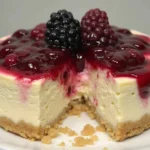
Indulgent Burnt Basque Cheesecake (The “Anti-Perfection” Cake)


Introduction
In the world of baking, “burnt” is usually a bad word. But in San Sebastián, Spain, it is a delicacy. The Basque Cheesecake, popularized by the famous La Viña restaurant, is the rebel of the cheesecake family. It breaks every rule of the traditional New York style: it has no crust, it uses no water bath, and it is baked at a scorching high temperature intentionally to blacken the top.1
This recipe for Indulgent Burnt Basque Cheesecake is perfect for the home baker who fears the “cracked top” of standard cheesecakes. Here, cracks and charred edges are not mistakes—they are the goal. The intense heat creates a bitter, caramelized exterior (thanks to the Maillard reaction) that acts as a natural crust, protecting a creamy, custard-like interior that borders on molten.2 It is rustic, sophisticated, and shockingly easy to make.
Ingredients List
The ratio of fat to sugar is what allows the cheesecake to hold its shape without a starch crust. Here is your curated shopping list.
The Core:
- 2 lbs (32 oz) Cream Cheese: 4 blocks, softened to room temperature.
- Critical Spec: Use full-fat brick style (like Philadelphia). Do not use tub spreads; the water content is too high.
- 1 ½ Cups Granulated Sugar:
- Why? This amount is necessary not just for sweetness, but to ensure the top caramelizes into that signature dark brown color.
- 5 Large Eggs: Room temperature.

The Liquids & Stabilizers:
- 1 Cup Heavy Whipping Cream: Cold or room temp.
- 1 Teaspoon Vanilla Extract.
- ¼ Cup All-Purpose Flour:
- Function: A tiny amount of flour helps stabilize the custard so it slices cleanly rather than puddling on the plate.
- ½ Teaspoon Salt: Essential to cut the richness.
Timing
This recipe requires a long cooling period to set the custard.3
- Preparation Time: 15 minutes.
- Baking Time: 55–65 minutes.
- Cooling Time: 4 hours (Minimum).4
- Total Time: Approx. 5 hours 15 minutes.
Data Insight: Unlike NY cheesecake, which is baked at 325°F to stay white, Basque cheesecake is baked at 400°F+. This high heat coagulates the outer proteins rapidly while leaving the center proteins looser, creating a dual-texture experience in a single bite.
Step-by-Step Instructions
Step 1: The “Rustic” Pan Prep
Preheat oven to 400°F (200°C).
- The Paper: Take two large sheets of parchment paper. Crumple them into a ball, then smooth them out.
- Line: Press the sheets into a 9-inch or 10-inch springform pan, overlapping them so the paper comes at least 2 inches up the sides.
- Aesthetic: Don’t try to make it neat. The folds and creases give the cheesecake its signature rustic look.
Step 2: The Creaming
In a stand mixer fitted with the paddle attachment (or large bowl with hand mixer):
- Mix: Beat the cream cheese and sugar on medium-low speed until completely smooth.
- Tip: Scrape the bowl down repeatedly. Any lumps of cheese now will remain lumps later.
Step 3: The Integration
- Eggs: Add eggs one at a time, beating on low speed after each addition just until incorporated.
- Warning: Do not whip on high speed. You do not want to incorporate air bubbles, or the cheesecake will puff up and crack too much.
Step 4: The Slurry
- Sift: In a small bowl, sift the flour. Whisk in a splash of the heavy cream to create a smooth paste (this prevents flour lumps).
- Combine: Pour the flour paste, the remaining cream, vanilla, and salt into the main batter. Mix on low until silky smooth.

Step 5: The Bake
- Pour: Pour the batter into the prepared pan. Tap the pan firmly on the counter 3-4 times to pop any air bubbles.
- Bake: Bake for 55–65 minutes.
- Visual Cue: The top should be a deep, dark brown (it may look burnt—trust the process). The cheesecake will puff up high like a soufflé.
- The Jiggle: When you shake the pan, the edges should be set, but the center should wobble significantly, like Jell-O.
Step 6: The Collapse and Cool
Remove from the oven.
- Collapse: As it cools, the cheesecake will deflate dramatically. This is normal.
- Cool: Let it cool in the pan at room temperature for 1 hour, then refrigerate for at least 4 hours (or overnight) to set the interior.
Nutritional Information
A rich dessert meant for small slices. Estimated breakdown per slice (serves 12):
| Nutrient | Amount | % Daily Value |
| Calories | 480 kcal | – |
| Total Fat | 35g | 45% |
| Saturated Fat | 22g | 110% |
| Carbohydrates | 32g | 11% |
| Sugars | 28g | – |
| Protein | 8g | 16% |
Data Insight: The “burnt” top is not actually carbon (charcoal); it is extreme caramelization. This introduces complex flavor notes of toffee and molasses that you don’t get in standard cheesecakes.
Healthier Alternatives for the Recipe
Customize your Basque Cheesecake for dietary needs:
- Gluten-Free:
- Simply omit the flour or swap it for 1 tablespoon of Cornstarch. The result is nearly identical.
- Keto / Low Carb:
- Use a granulated Monk Fruit/Erythritol blend instead of sugar. Note that sugar substitutes do not caramelize as darkly, so the top may be lighter in color.
- Lighter:
- There is no “light” version of this that tastes authentic. It relies on fat for structure.
Serving Suggestions
- The Temp: Serve at room temperature for a creamy texture, or cold for a fudgier texture.
- The Pairing: A glass of Sherry wine or a strong Cortado coffee.
- The Sauce: It needs nothing, but a tart fruit compote (raspberry or cherry) cuts through the heavy creaminess.
Common Mistakes to Avoid
Fear of the burn is the enemy.
- Pulling Too Early:
- The Error: Taking it out when it’s golden brown.
- The Result: It’s just a normal cheesecake.
- The Fix: Be brave. Let it get dark brown/black.
- Using Cold Ingredients:
- The Error: Cold cream cheese.
- The Result: Lumpy batter that never smooths out.
- The Fix: Leave ingredients on the counter for 2 hours before starting.
- Slicing Warm:
- The Error: Cutting before chilling.
- The Result: A puddle of cheese soup.
- The Fix: It must chill for 4+ hours to sliceable firmness.
Storing Tips for the Recipe
This cake keeps well.
- Refrigeration: Keep in the parchment paper (or plastic wrap) in the fridge for up to 5 days.
- Freezing: It freezes surprisingly well. Wrap individual slices tightly in plastic wrap and freeze for up to 1 month. Thaw in the fridge.
Conclusion
The Burnt Basque Cheesecake is a masterpiece of imperfection. It proves that culinary precision isn’t always about clean lines and water baths; sometimes, it’s about high heat and chemical reactions. The contrast between the bitter, charred crust and the sweet, creamy interior is a flavor profile that lingers in your memory long after the last bite.
Summary: A crustless cheesecake baked at high heat to create a caramelized “burnt” exterior and a creamy, custard interior.5
Ready to burn it?
Crumple that parchment! Rate this recipe 5 stars if you were brave enough to let it get dark, and leave a comment below: do you eat the “burnt” edge or leave it? Subscribe for more global desserts!
FAQs
Why did my cheesecake crack?
Good! Unlike NY cheesecake, Basque cheesecake is supposed to crack. It adds to the rustic charm. The cracks usually settle and close up as it cools and deflates.
Can I make this in a 6-inch pan?
Yes. Halve the recipe ingredients. Bake time will be reduced to roughly 35–40 minutes.
Is the center supposed to be raw?
It is supposed to be soft and custard-like, like a Brie cheese, but not raw liquid. If it is purely liquid after cooling, it was underbaked.