Follow Me On Social Media!

One-Pan Salmon, Roasted Potatoes & Asparagus


Introduction
The “Sheet Pan Dinner” is the modern home cook’s secret weapon, but it comes with a scientific challenge: Thermodynamics. A potato takes 30 minutes to roast; a salmon fillet takes 12. If you throw everything in at once, you end up with either raw potatoes or dry, chalky fish.
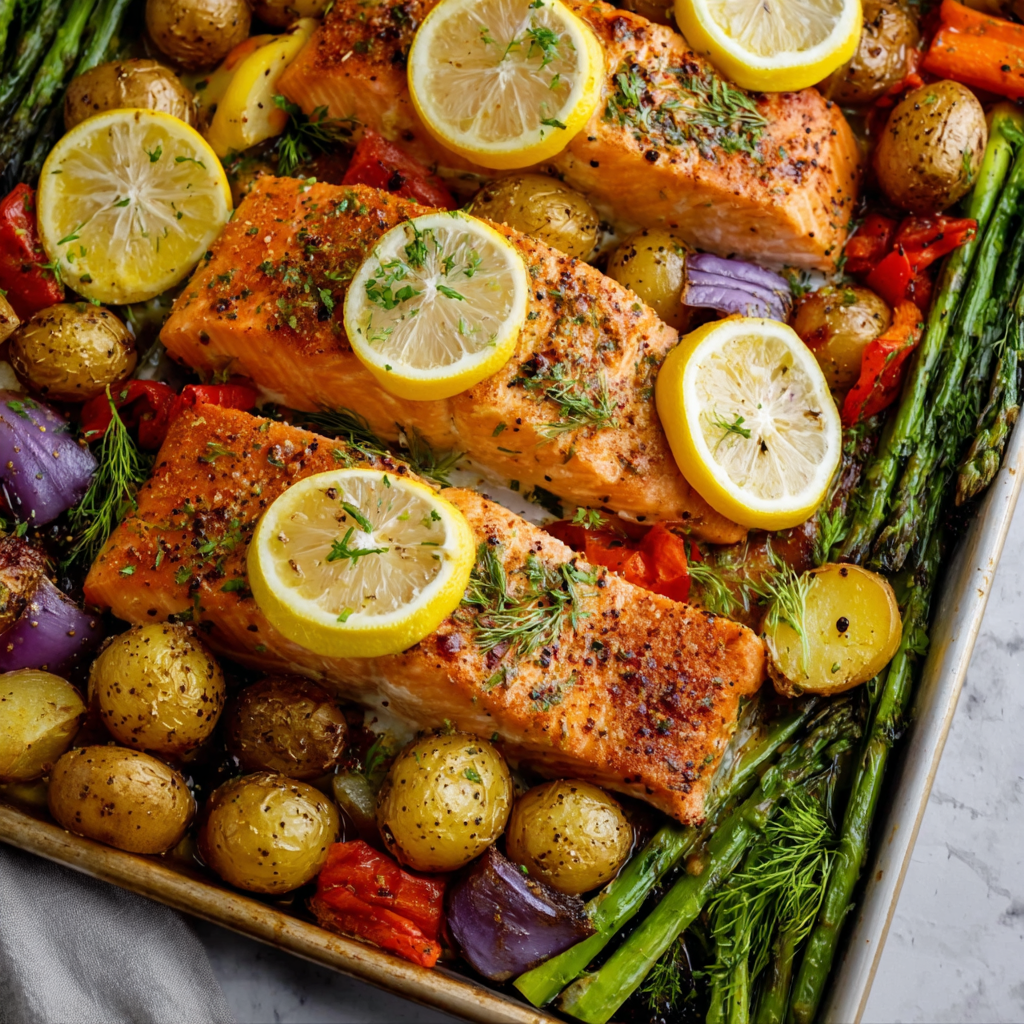
This recipe for One-Pan Salmon and Potatoes with Veggies solves that problem using the “Staggered Entry” method. We roast the potatoes first to get them crispy and golden, then add the tender salmon and asparagus for the final leg of the race. The result is a perfectly timed, restaurant-quality meal with easy cleanup and a bright Garlic-Lemon-Herb butter that ties everything together.
Ingredients List
For a sheet pan meal, uniform cutting is the key to even cooking. Here is your curated shopping list.
The Protein:
- 4 Salmon Fillets (6oz each):
- Selection: Skin-on fillets are best as the skin protects the meat from the hot metal pan, keeping it moist. Center-cut fillets cook more evenly than tail pieces.
The Starch:
- 1.5 lbs Baby Potatoes (New Potatoes):
- Prep: Cut in half (or quarters if large).
- Why Baby? They have a thin skin and creamy interior that roasts faster than Russets.
- 2 Tablespoons Olive Oil.
The Veggie:
- 1 Bunch Asparagus (approx. 1 lb):
- Prep: Woody ends trimmed.
- Alternative: Broccoli florets or Green Beans (Haricots Verts) work with the exact same timing.

The “Liquid Gold” Sauce:
- 4 Tablespoons Unsalted Butter: Melted.
- 2 Cloves Garlic: Minced.
- 1 Tablespoon Fresh Dill: Chopped (or 1 tsp dried).
- 1 Lemon: Half juiced, half sliced for garnish.
- Salt & Black Pepper.
Timing
The success of this dish relies on the timer.
- Prep Time: 15 minutes.
- Potato Roast Time: 20 minutes.
- Salmon/Veggie Roast Time: 12–15 minutes.
- Total Time: Approx. 50 minutes.
Data Insight: Salmon is considered “cooked” at 145°F (USDA), but many chefs prefer it at 125°F–130°F for a medium, flaky texture. By roasting at a high temperature (400°F), you coagulate the proteins quickly on the outside while leaving the inside tender.
Step-by-Step Instructions
Step 1: The Potato Head Start
Preheat oven to 400°F (200°C). Line a large rimmed baking sheet with parchment paper or foil (for easy cleanup).
- Toss: On the baking sheet, toss the halved potatoes with 2 tablespoons of olive oil, salt, and pepper. Spread them out cut-side down.
- Roast: Bake for 20 minutes.
- Check: They should be starting to soften and turn golden on the bottom.
Step 2: The Sauce Prep
While potatoes roast, make the flavor base.
- Mix: In a small bowl, whisk together the melted butter, minced garlic, lemon juice, and dill.
Step 3: The Assembly
Remove the pan from the oven.
- Push: Push the potatoes to one side of the pan (or around the edges).
- Place: Place the salmon fillets and asparagus spears in the center of the pan.
- Dress: Drizzle the garlic-butter mixture generously over the salmon and the asparagus. (Toss the asparagus gently to coat).
- Garnish: Place lemon slices on top of the fish.
Step 4: The Final Roast
- Bake: Return the pan to the oven and bake for 12–15 minutes.
- Test: Salmon should flake easily with a fork. Asparagus should be tender-crisp.
- Optional Broil: If you want extra color, switch the oven to Broil for the last 2 minutes (watch carefully so the garlic doesn’t burn).
Nutritional Information
A perfectly balanced “Macro Meal.” Estimated breakdown per serving:
| Nutrient | Amount | % Daily Value |
| Calories | 480 kcal | – |
| Protein | 34g | 68% |
| Healthy Fats | 28g | 40% |
| Carbohydrates | 25g | 9% |
| Omega-3s | High | – |
Healthier Alternatives for the Recipe
Customize your Sheet Pan Salmon for wellness goals:
- Low Carb / Keto:
- Swap the potatoes for Cauliflower Florets or Radishes. Add them at the same time as the salmon (no head start needed for cauliflower).
- Dairy-Free:
- Swap the butter for Ghee (clarified butter) or extra Olive Oil.
- Spice Kick:
- Replace the lemon-dill butter with a Cajun Rub or a drizzle of Sriracha-Honey glaze.
Serving Suggestions
- The Sauce: While the butter sauce cooks on the fish, serving a side of cold Yogurt Dill Sauce or Tzatziki adds a nice temperature contrast.
- The Grain: If you need more carbs, serve over a bed of Quinoa or Rice Pilaf.
- The Freshness: A simple Arugula Salad with vinaigrette cuts the richness of the salmon.
Common Mistakes to Avoid
Respect the zones.
- The “Mushy Potato”:
- The Error: Overcrowding the pan.
- The Result: Vegetables steam instead of roast.
- The Fix: Use the largest sheet pan you have. If potatoes are touching, use two pans.
- The “White Stuff” on Salmon:
- The Science: That white gunk is albumin (protein). It appears when salmon is cooked too fast or overcooked.
- The Fix: Don’t stress it, it’s edible. But pulling the salmon at 130°F usually prevents it.
- Burnt Garlic:
- The Error: Minced garlic on the roasting tray for 40 minutes.
- The Fix: That’s why we add the garlic butter with the salmon in the second half of cooking.
Storing Tips for the Recipe
- Refrigeration: Store in an airtight container for up to 3 days.
- Reheating: Do not microwave salmon if you can avoid it (it smells and gets rubbery). Reheat in a warm oven (300°F) for 10 minutes, or eat the leftovers cold over a salad (highly recommended).
- Freezing: Roasted potatoes do not freeze well (they become mealy). Eat this fresh.
Conclusion
One-Pan Salmon and Potatoes is the definition of “smart cooking.” By understanding that dense tubers and delicate fish have different needs, you can stagger their cooking times to achieve perfection on a single tray. It’s a heart-healthy, vibrant dinner that leaves you with full bellies and only one pan to wash.
Summary: A sheet-pan dinner where baby potatoes are roasted first, followed by salmon and asparagus, all finished with a garlic-lemon-dill butter.
Ready to roast?
Preheat that oven! Rate this recipe 5 stars if you loved the easy cleanup, and leave a comment below: asparagus or broccoli? Subscribe for more weeknight wins!