Follow Me On Social Media!

Oven-Baked Texas-Style Brisket (The “Fake-Out” Smoker Method)

Introduction
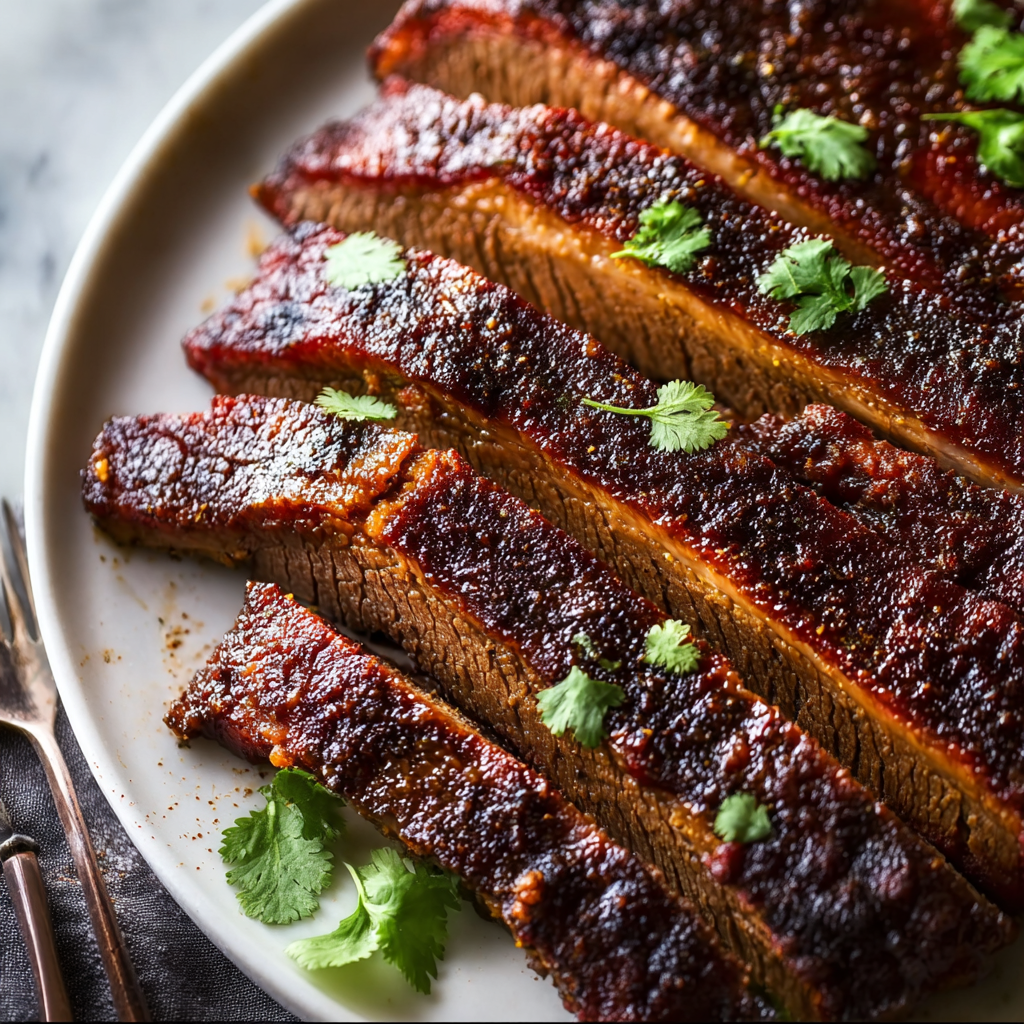
Did you know that the legendary “smoke ring” and black “bark” on a Texas brisket are technically chemical reactions that usually require burning wood for 12+ hours? For most home cooks without a 500-gallon offset smoker, authentic brisket feels out of reach.
But here is the secret: You can achieve 90% of the flavor and texture of a Central Texas BBQ joint using your standard kitchen oven. This Oven-Baked Texas-Style Brisket uses a “Low and Slow” method combined with a specific spice rub and a liquid smoke hack to replicate the real deal. We are looking for meat that is fork-tender, juicy, and coated in a peppery, dark crust. Put away the charcoal; we’re doing this indoors.
Ingredients List
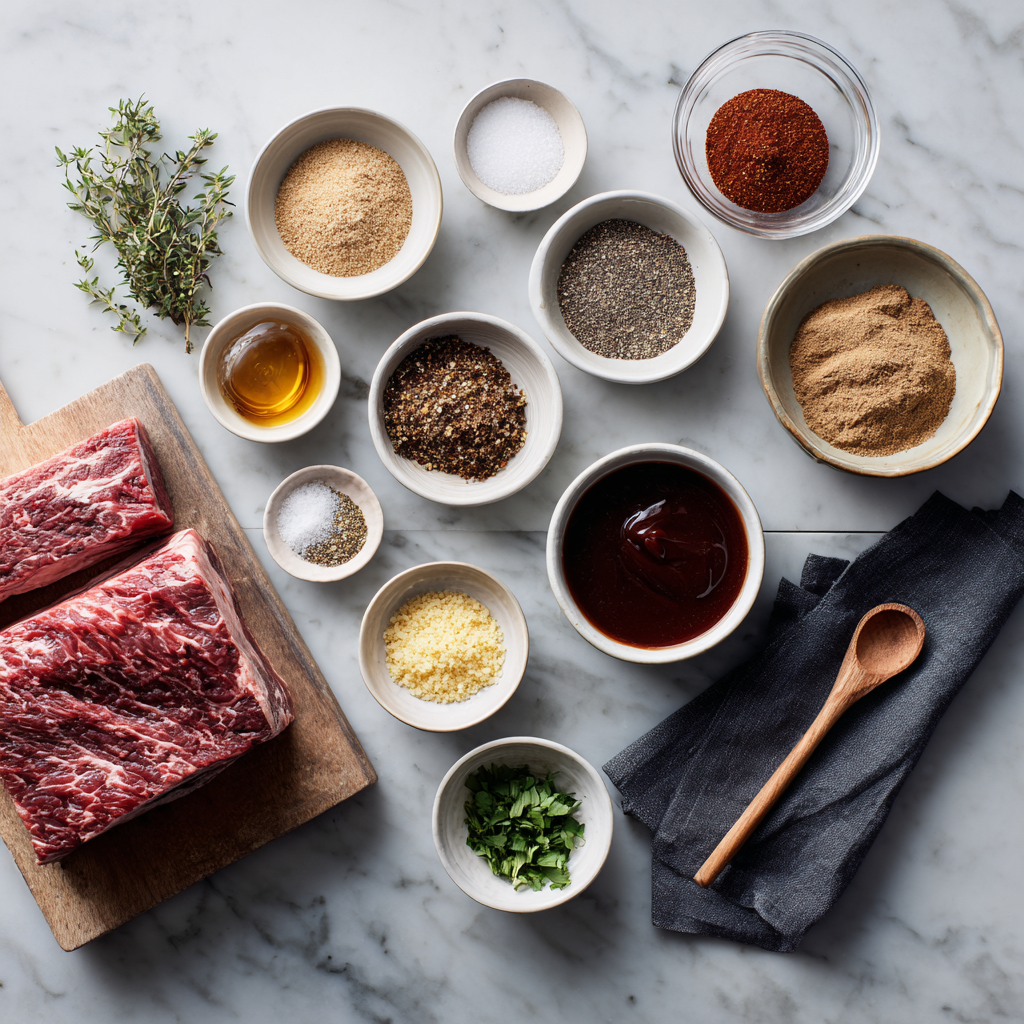
True Texas brisket relies on the “Dalmatian Rub”—mostly salt and black pepper.1
The Meat
- 4–6 lb Beef Brisket Flat:
- Why the Flat? A whole “packer” brisket (12-15 lbs) is often too large for home ovens and takes 16 hours. The “flat” cut is leaner, slices beautifully, and cooks in a manageable 7–9 hours.
- Fat Cap: Try to find a piece with a layer of fat on top. You want to trim this to about ¼ inch thick. Do not remove it all; it bastes the meat!
The “Texas” Rub
- 3 tbsp Coarse Black Pepper: Crucial: Do not use fine table pepper.2 You need the crunch and bark of coarse 16-mesh pepper.
- 3 tbsp Kosher Salt: (Diamond Crystal brand is best; if using Morton’s, use half the amount).
- 1 tbsp Garlic Powder.
- 1 tbsp Smoked Paprika: This is the “oven hack.” It adds the reddish hue and smoky flavor usually provided by wood.
The Binder (The Glue)
- 2 tbsp Yellow Mustard: You won’t taste it, but it helps the rub stick.
- 1 tbsp Liquid Smoke (Hickory or Mesquite): This is the magic. It infuses the meat with wood flavor.
- 1 tbsp Worcestershire Sauce.
Sensory Note: The bark should be dark and peppery, almost looking burnt (it’s not!). The meat should pull apart with a gentle tug but hold its shape when sliced.
Timing
This is a marathon, not a sprint. Start this early in the morning.
- Preparation Time: 20 minutes
- Cooking Time: 7–9 hours (approx. 1 hour and 15 mins per pound)
- Resting Time: 1 hour (Non-negotiable)
- Total Time: ~9–10 hours
Data Insight: Collagen, the connective tissue that makes brisket tough, begins to break down into gelatin at 160°F but requires time to fully melt. Rushing the temperature to 300°F+ will tighten the fibers, squeezing out moisture and resulting in dry meat.3 225°F–250°F is the scientific sweet spot.
Step-by-Step Instructions
Step 1: Trim and Prep
Preheat your oven to 250°F (120°C).
- Trim: Remove any hard, waxy fat and silver skin. Trim the top fat cap to an even ¼ inch layer.
- The Binder: In a small bowl, mix the mustard, liquid smoke, and Worcestershire sauce. Rub this sticky mixture all over the brisket.
Step 2: The Seasoning
Mix the salt, coarse pepper, garlic powder, and smoked paprika.
- Sprinkle generously over the entire brisket. Pat it in (don’t rub it off). Use all the mix—brisket is a big piece of meat and needs heavy seasoning.
Step 3: The “Bark” Phase (Uncovered Bake)
Place the brisket fat-side up on a wire rack set inside a rimmed baking sheet (or roasting pan).
- Why a Rack? Air circulation mimics a smoker. If it sits flat in the pan, the bottom will boil in its own juices and get mushy.
- Bake uncovered for 4 to 5 hours.
- Check Point: The internal temperature should be around 160°F–170°F.4 The outside should look dark and crusty.
Step 4: The “Texas Crutch” (Wrapping)
Remove the brisket. It has hit “The Stall” (where evaporation cools the meat and cooking slows down).5
- Tear off two long sheets of heavy-duty aluminum foil (or pink butcher paper if you want to be authentic).
- Place the brisket in the center. Drizzle with a little beef broth or melted butter if it looks dry.
- Wrap it tightly. No leaks!
- Return to the oven and bake for another 2 to 3 hours.
Step 5: The Finish Line
Start checking the temperature after 2 hours wrapped.
- Target Temp: You are looking for an internal temperature of 200°F to 205°F (93°C–96°C) in the thickest part.
- The Probe Test: The thermometer probe should slide into the meat like it’s butter, with almost zero resistance.
Step 6: The Rest (Critical)
Remove from the oven. Keep it wrapped in the foil.
- Wrap the foil package in an old towel and place it in a cooler (without ice) or just leave it on the counter.
- Rest for at least 1 hour. This allows the juices to redistribute. If you cut it now, it will bleed out and be dry.
Step 7: Slice
Unwrap. Slice against the grain into pencil-thick slices.
Nutritional Information
Brisket is rich and fatty. Below is the estimated breakdown per 4oz serving.
| Nutrient | Amount per Serving | % Daily Value* |
| Calories | 320 kcal | 16% |
| Total Fat | 24g | 37% |
| Saturated Fat | 9g | 45% |
| Carbohydrates | 1g | 0% |
| Protein | 28g | 56% |
| Iron | 2.5mg | 14% |
Variations for the Recipe
- BBQ Sauce Glaze: Texas brisket is traditionally served “naked” (sauce on the side), but if you love sticky ribs, brush the brisket with BBQ sauce 20 minutes before taking it out of the oven (during the wrapped phase, open the foil top slightly).
- Onion Bed: Roast the brisket on top of thick onion slices instead of a wire rack. The onions will caramelize and flavor the meat drippings.
- The “Burnt Ends”: If using a “Point” cut (fattier), cube the cooked meat, toss with BBQ sauce, and blast in the oven at 400°F for 15 minutes for crispy nuggets.
Serving Suggestions
- The Sides: Classic pairings include Potato Salad, Coleslaw, and sliced white bread (to soak up juices).
- Pickles: Serve with pickles and raw white onion slices to cut the richness of the fat.
- The Drink: An ice-cold Shiner Bock or sweet iced tea.
Common Mistakes to Avoid
- Slicing with the Grain:
- The Issue: Cutting parallel to the muscle fibers.
- The Result: Stringy, tough meat that is impossible to chew.
- The Fix: Look for the lines in the meat. Cut perpendicular (across) them to shorten the fibers.
- Skipping the Rest:
- The Issue: Cutting immediately.
- The Result: A puddle of juice on the board and dry meat on the fork.
- The Fix: Let it sleep for an hour.
- Oven Too Hot:
- The Issue: Baking at 350°F to save time.
- The Result: Tough, chewy meat.
- The Fix: Low and slow (250°F) is the only way to melt collagen.
Storing Tips for the Recipe
- Refrigeration: Store leftover unsliced brisket tightly wrapped in the fridge for 3-4 days.
- Reheating: Do not microwave. Place slices in a baking dish, splash with beef broth, cover with foil, and heat at 325°F for 20 minutes.
- Freezing: Freeze slices with some of the cooking juices in a freezer bag for up to 3 months.
Conclusion
Oven-Baked Texas-Style Brisket is a labor of love that pays off in flavor. It proves that you don’t need to tend a fire for 14 hours to enjoy world-class BBQ. With a little patience, lots of black pepper, and the magic of a foil wrap, you can create a centerpiece meal that falls apart at the touch of a fork.
Ready to slow down? Get that oven preheating! If you try this recipe, please leave a star rating below and let us know: did you manage to wait the full hour for the rest? Don’t forget to subscribe to our newsletter for more indoor BBQ hacks.

FAQs
Q: Can I use a slow cooker?
A: Yes, but you won’t get the “bark.” The slow cooker creates a steamed texture (like pot roast). The oven method is far superior for texture.
Q: My brisket is dry. What happened?
A: It was likely either lean (no fat cap), sliced with the grain, or not cooked long enough (undercooked collagen is tough). Or, you skipped the wrapping stage.
Q: Do I need pink butcher paper?
A: Paper is breathable, preserving the bark better than foil (which steams the meat).6 However, foil cooks faster. For oven brisket, foil is perfectly fine and easier to find.