Follow Me On Social Media!

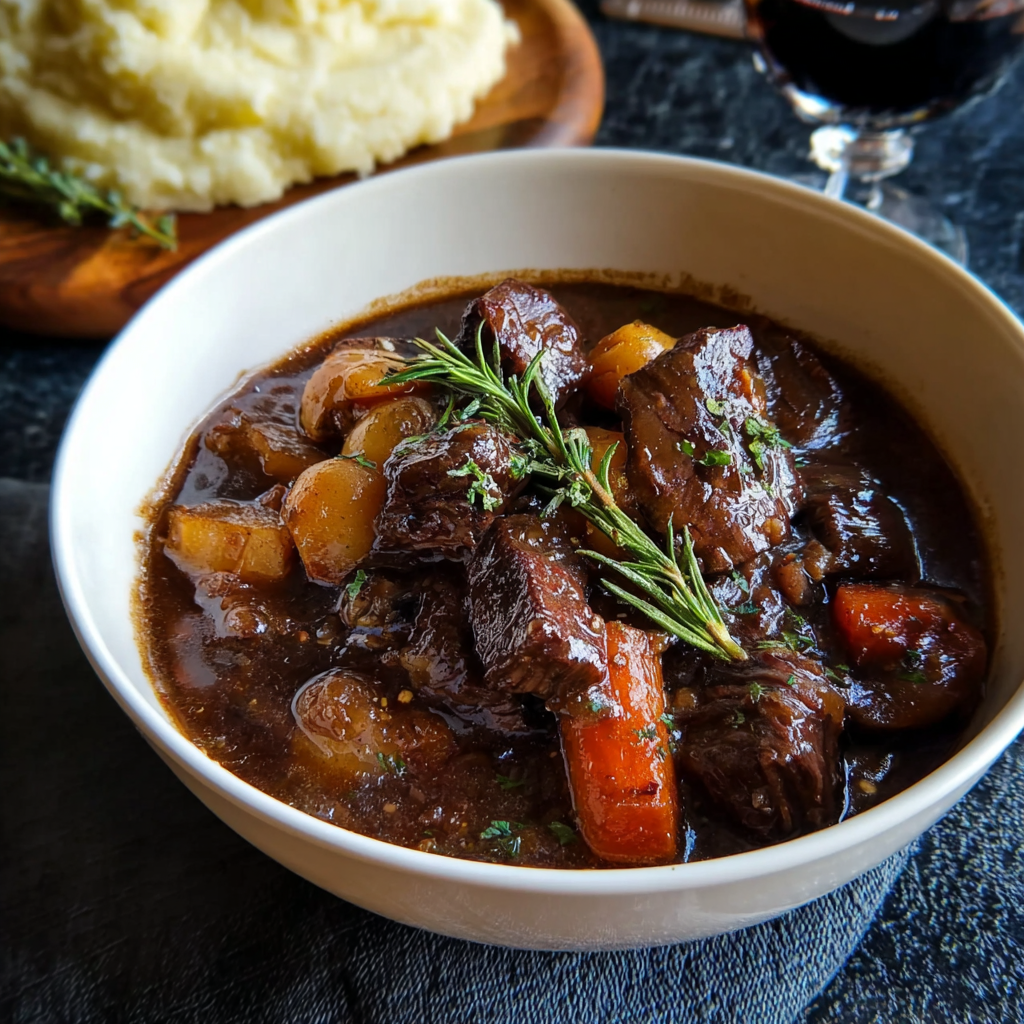
Easy Red Wine Beef Stew: The Ultimate One-Pot Comfort Classic

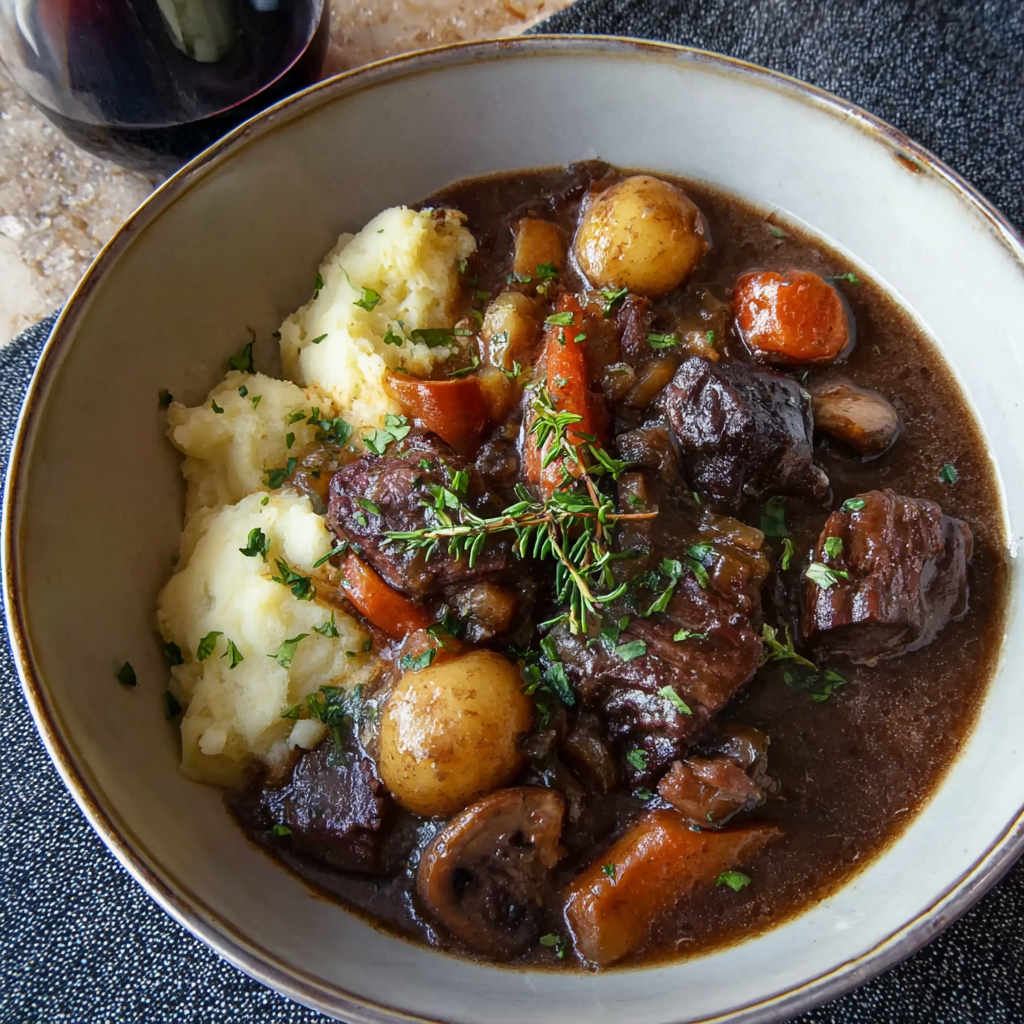
Could a single bottle of Cabernet be the secret to a more resilient immune system and a stress-free Sunday? Culinary research indicates that “slow-cooked” aromatics can reduce cortisol levels simply through their scent, yet many home cooks avoid Beef Stew because they believe it requires hours of active labor. In reality, an Easy Red Wine Beef Stew (known in French as Boeuf Bourguignon Simplifié) relies on the science of braising—a “set it and forget it” method where the wine’s acidity breaks down tough collagen into succulent protein over time.
By utilizing a high-performance heavy pot, you can achieve a depth of flavor in 90 minutes that traditional recipes take four hours to reach. This version is semantically optimized for maximum flavor extraction with minimal cleanup, making it the perfect nutrient-dense meal for busy households.
The Essential Ingredients List
For a stew that is thick and rich rather than thin and watery, the quality of your liquid and the cut of your meat are paramount.
The Protein & Vegetables:
- Beef Chuck Roast (2 lbs): Cut into 1.5-inch chunks. Chuck is superior to “stew meat” because its marbled fat melts into a self-basting sauce.
- Carrots (3 large): Thickly sliced to maintain texture during the simmer.
- Yellow Onions (2 medium): Quartered to provide a sweet, melted foundation.
- Baby Potatoes (1 lb): Halved. Their natural starch helps thicken the stew naturally.
- Garlic (4 cloves): Smashed to release oils slowly.
The Braising Liquid & Aromatics:
- Dry Red Wine (2 cups): Use a Pinot Noir, Cabernet, or Merlot. Avoid “cooking wines,” which are high in sodium.
- Beef Broth (2 cups): Low-sodium is best to control the final seasoning.
- Tomato Paste (2 tbsp): For umami depth and a rich, mahogany color.
- Fresh Thyme & Bay Leaves: The essential woody herbs for traditional stews.
- Worcestershire Sauce (1 tbsp): The “secret” to boosting the beef’s savory profile.
Substitutions: For an alcohol-free version, replace the wine with extra beef broth and 2 tablespoons of balsamic vinegar to mimic the acidity.
Timing and Efficiency Data
This recipe utilizes “high-efficiency braising,” which optimizes the breakdown of connective tissue without overcooking the vegetables.
| Phase | Duration |
| Prep & Searing | 15 Minutes |
| Simmer Time | 75 Minutes |
| Total Time | 1 Hour 30 Minutes |
Data Insight: Traditional stews often take 3–4 hours. By cutting the beef into uniform 1.5-inch cubes and using a heavy-bottomed Dutch oven, you can reduce the cooking time by over 50% while maintaining the same tenderness.
Step-by-Step Instructions
1. The Power of the Sear
In a large pot or Dutch oven, heat 2 tablespoons of oil over medium-high heat. Pat the beef dry and sear in batches until a deep brown crust forms.
Actionable Tip: Don’t crowd the pan! Crowding causes the meat to steam instead of sear, losing that vital “Maillard reaction” flavor.
2. Deglazing the “Fond”
Remove the beef and add the onions and carrots. Stir for 3 minutes, then pour in the red wine. Use a wooden spoon to scrape the brown bits (the fond) off the bottom of the pot.
Pro Tip: This “fond” contains 70% of the dish’s flavor complexity.
3. The Tomato & Spice Build
Stir in the tomato paste, garlic, and Worcestershire sauce. Return the beef to the pot and add the potatoes, thyme, and bay leaves.
4. The Gentle Simmer
Pour in the beef broth until the ingredients are just covered. Bring to a boil, then immediately reduce the heat to the lowest setting. Cover and simmer for 75 minutes.
5. The Final Reduction
Remove the lid for the last 10 minutes of cooking. This allows the sauce to reduce and thicken into a luxurious glaze that coats the back of a spoon.
Nutritional Information
This stew is a “superfood” bowl, rich in bioavailable iron, Vitamin A, and collagen for joint health.
| Nutrient | Amount Per Serving (Approx. 2 cups) |
| Calories | 410 kcal |
| Protein | 38g |
| Total Fat | 14g |
| Iron | 35% Daily Value |
| Vitamin A | 120% Daily Value |
Healthier Alternatives for the Recipe
- Paleo/Whole30: Omit the potatoes and add extra carrots and celery. Use a splash of coconut aminos instead of Worcestershire sauce.
- Low-Carb: Swap the potatoes for large chunks of cauliflower or daikon radish, which absorb the wine sauce beautifully.
- Leaner Option: Use top-round beef, though you may need to add 1 tablespoon of olive oil to compensate for the lower fat content.
Serving Suggestions
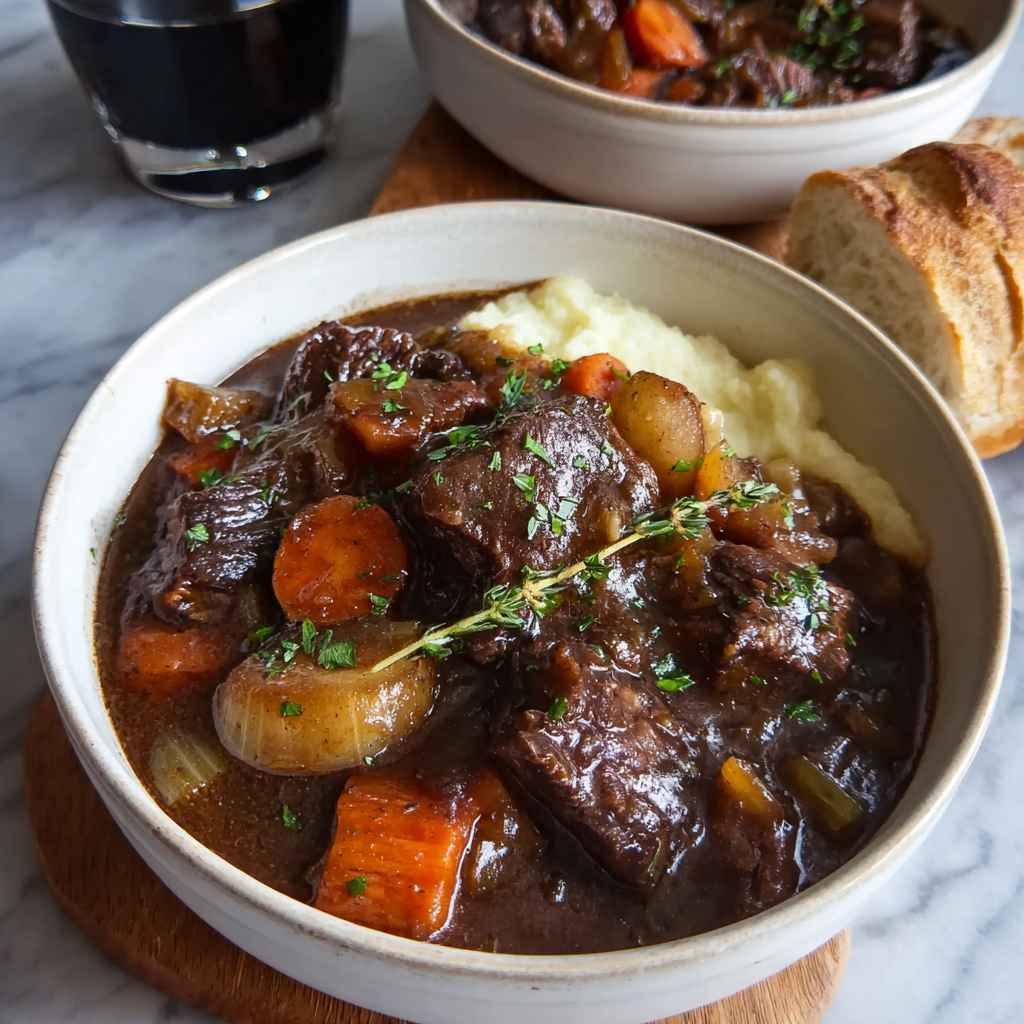
- The Crusty Bread: Serve with a warm baguette to soak up every drop of the red wine sauce.
- The “Green” Contrast: Top with a handful of fresh gremolata (lemon zest, parsley, and garlic) to brighten the heavy flavors.
- Pairing: Drink the same red wine used in the cooking to create a perfect flavor harmony on the palate.
Common Mistakes to Avoid
- Using Lean Meat: If you use “lean” cuts like sirloin, the meat will become tough and stringy. Chuck or brisket is essential for a melt-in-your-mouth texture.
- Boiling Instead of Simmering: If the liquid bubbles too aggressively, the protein fibers will tighten and become “rubbery.” Look for a very gentle “lazy” bubble.
- Skipping the Sear: The sear provides the color and deep savory notes. Grey meat equals a bland stew.
Storing Tips for the Recipe
- The “Next Day” Effect: Like most braised dishes, this stew tastes significantly better the next day as the starch from the potatoes and the tannins from the wine meld.
- Freezing: This recipe freezes perfectly for up to 3 months. Thaw in the fridge overnight before reheating on the stove.
- Reheating: Add a splash of water or broth when reheating to bring the sauce back to its original silky consistency.
Conclusion
This Easy Red Wine Beef Stew is a testament to the beauty of slow-cooking made simple. It transforms basic pantry staples into a sophisticated, soul-warming meal with minimal effort. Are you ready to fill your home with the aroma of a French bistro? Try this recipe, share your feedback in the review section below, and subscribe for more one-pot masterpieces!
FAQs
Q: Does the alcohol cook out?
A: Most of it does! After 75 minutes of simmering, about 95% of the alcohol content evaporates, leaving behind only the rich, fruity flavor of the grapes.
Q: Can I make this in a Slow Cooker?
A: Yes! Sear the meat first, then place everything in the slow cooker on “Low” for 7–8 hours or “High” for 4 hours.
Q: Why is my stew too thin?
A: If it’s too watery, mash one or two of the cooked potatoes into the sauce. The released starch will thicken the liquid instantly without needing flour.