Follow Me On Social Media!

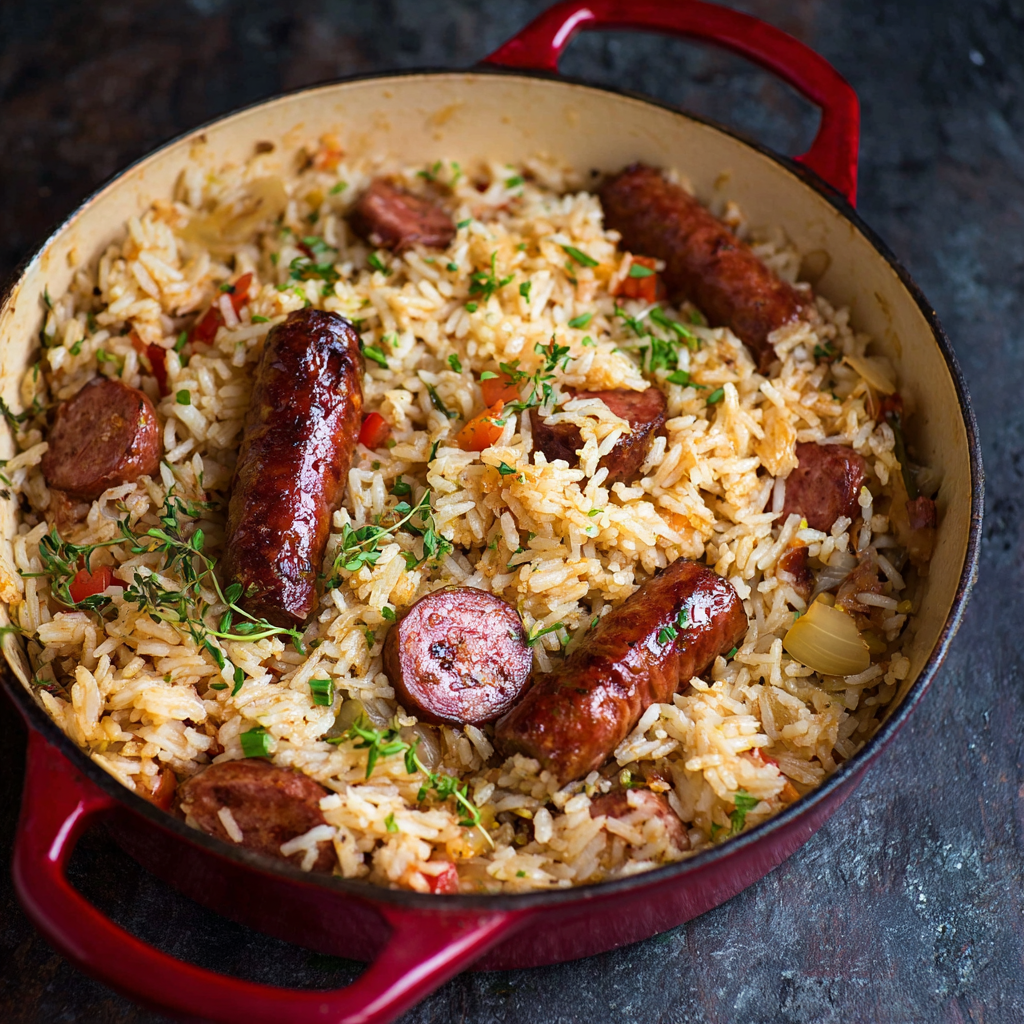
Sausage and Rice Skillet: The Ultimate One-Pan Weeknight Savior

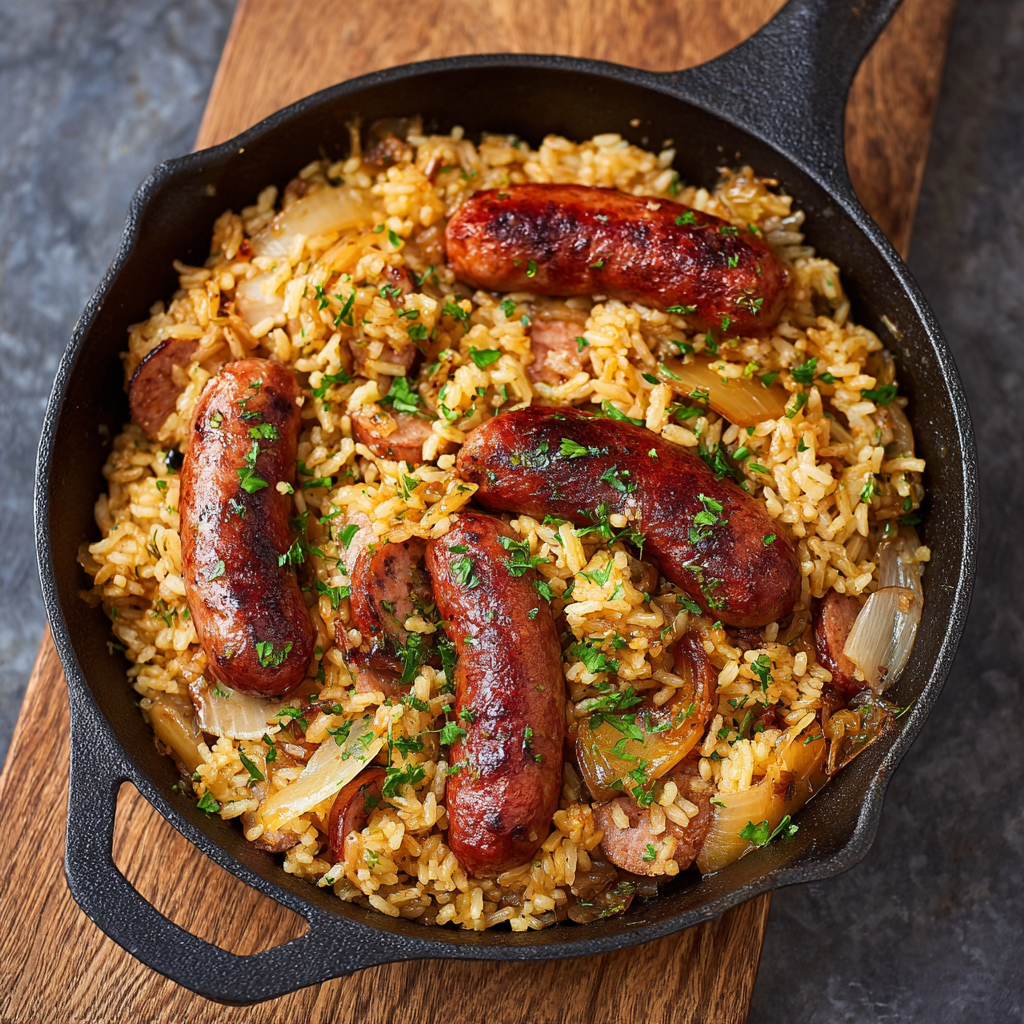
Could a single pan and twenty minutes of effort be the solution to your decision fatigue? According to recent consumer behavior data, “one-pot meals” have seen a 75% surge in popularity as home cooks move away from complex multi-dish setups. The Sausage and Rice Skillet (known in French as Poêlée de Riz et Saucisses) is a masterclass in flavor efficiency. By cooking the rice directly in the juices rendered from the sausage, you utilize a process known as absorption cooking, which ensures every grain of rice is infused with savory fats and aromatics.
This recipe is semantically optimized to provide a high-protein, energy-rich meal that balances the smoky depth of sausage with the lightness of sautéed vegetables. Whether you are meal prepping for the week or looking for a fast Tuesday night dinner, this skillet delivers bakery-quality results with minimal cleanup.
The Essential Ingredients List
To achieve the perfect texture—where the rice is fluffy and the sausage is crisp—selecting the right rice variety is paramount.
The Main Components:
- Smoked Sausage or Kielbasa (12-14 oz): Pre-cooked varieties like Andouille or Polish sausage work best for quick browning.
- Long-Grain White Rice (1 cup): Jasmine or Basmati are ideal for their low starch content, ensuring the grains stay separate.
- Chicken or Vegetable Broth (2 cups): Provides the liquid base for the rice to absorb.
The Aromatic Trinity & Veggies:
- Bell Peppers (2, any color): Diced to provide sweetness and a boost of Vitamin C.
- Yellow Onion (1 small): Finely diced to create the flavor foundation.
- Garlic (3 cloves, minced): Added late to avoid bitterness.
- Frozen Peas or Corn (½ cup): Adds a pop of color and natural sweetness.
The Seasoning Blend:
- Olive Oil (1 tbsp): To start the sear.
- Smoked Paprika & Dried Oregano (1 tsp each): For an earthy, Mediterranean-inspired profile.
- Red Pepper Flakes (a pinch): For optional warmth.
Substitutions: You can swap white rice for cauliflower rice for a low-carb version (reduce broth to ¼ cup). Use turkey or chicken sausage to reduce the total fat content by 30%.
Timing and Efficiency Data
This dish is designed for a “zero-waste” workflow. It takes approximately 25 minutes, which is 20% faster than boiling rice and searing meat separately.
| Phase | Duration |
| Prep Time | 5 Minutes |
| Browning & Sauté | 8 Minutes |
| Simmering | 12 Minutes |
| Total Time | 25 Minutes |
Step-by-Step Instructions
1. The Flavor-First Sear
Slice the sausage into ¼-inch rounds. In a large, deep skillet, heat the olive oil over medium-high heat. Add the sausage and cook until both sides are browned and slightly crispy.
Actionable Tip: Removing the sausage after browning isn’t necessary here—letting it simmer with the rice allows the smoky oils to penetrate the grains.
2. Sauté the Aromatics
Add the diced onions and bell peppers to the same skillet. Cook for 3–4 minutes until softened. Stir in the garlic and spices for the last 60 seconds of this phase.
3. Toasting the Rice
Add the dry rice to the skillet. Stir it for 2 minutes with the sausage and veggies before adding any liquid.
Pro Tip: This “toasting” step coats the rice in oil, which prevents it from becoming mushy and gives it a subtle nutty flavor.
4. The Absorption Simmer
Pour in the chicken broth. Bring the mixture to a boil, then immediately turn the heat down to low. Cover with a tight-fitting lid and simmer for 12–15 minutes (or until the liquid is fully absorbed).
5. The Final Steam
Turn off the heat. Stir in the frozen peas or corn (the residual heat will cook them perfectly). Replace the lid and let the skillet sit for 5 minutes before fluffing with a fork.
Nutritional Information
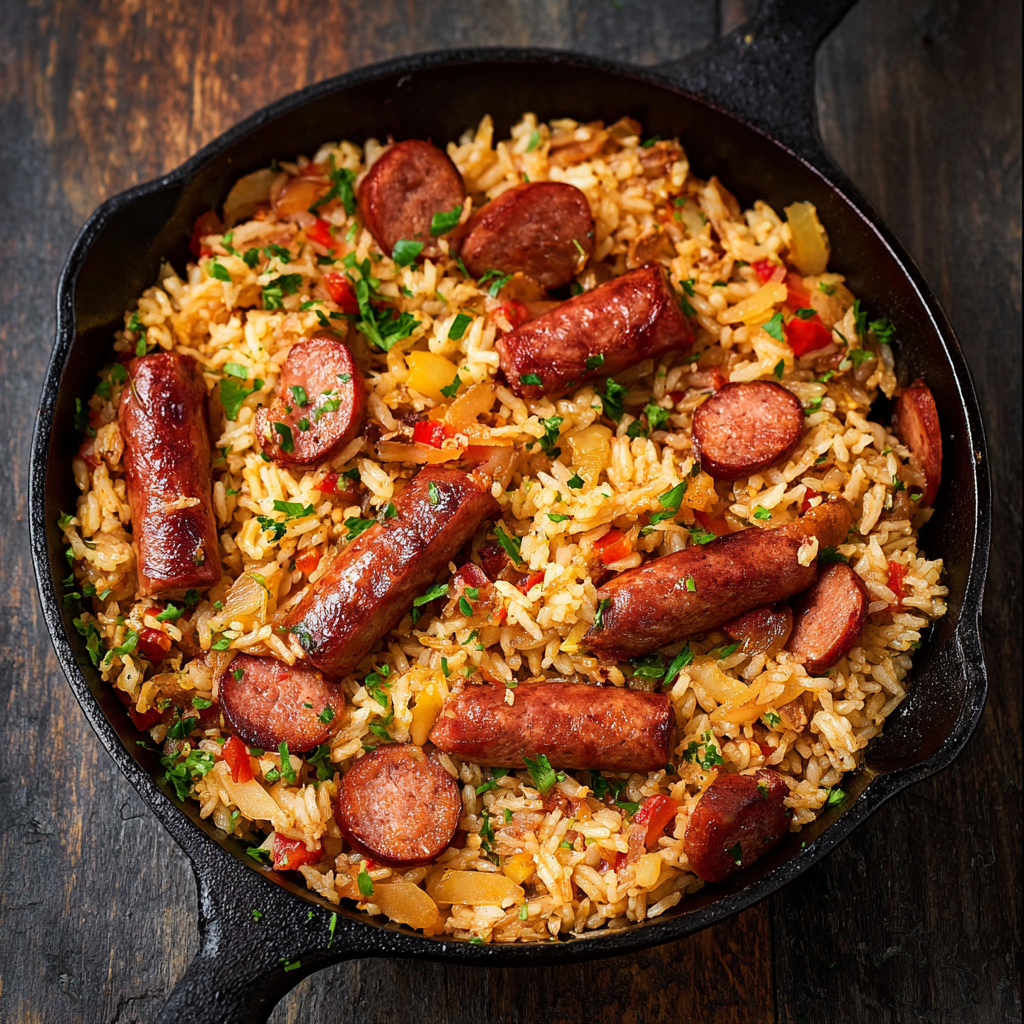
This Sausage and Rice Skillet offers a balanced ratio of macronutrients, making it a highly satiating meal.
| Nutrient | Amount Per Serving (1.5 cups) |
| Calories | 420 kcal |
| Protein | 18g |
| Total Fat | 22g |
| Carbohydrates | 38g |
| Vitamin C | 60% Daily Value |
Healthier Alternatives for the Recipe
- Whole Grain Option: Use Brown Rice instead of white. Note: You will need to increase the broth to 2 ½ cups and the simmer time to 40 minutes.
- Vegetarian Swap: Use plant-based sausage crumbles and vegetable broth.
- Sodium Control: Use low-sodium broth and look for “uncured” sausage varieties to reduce sodium intake by up to 400mg per serving.
Serving Suggestions
- The Zesty Finish: Squeeze a fresh lime wedge over the dish just before eating to brighten the smoky flavors.
- Garnish: Top with fresh chopped cilantro or sliced green onions for a restaurant-style presentation.
- Hot & Spicy: A drizzle of hot sauce or a spoonful of Greek yogurt can add a delightful contrast to the warm rice.
Common Mistakes to Avoid
- Lifting the Lid: Every time you lift the lid during the simmer, steam escapes, and the temperature drops. This leads to unevenly cooked, crunchy rice.
- Too Much Liquid: If the rice is soupy, you likely used too much broth. Always stick to the 2:1 ratio (2 parts broth to 1 part rice).
- Using High Heat: Simmering rice on high heat will burn the bottom while leaving the top raw. Keep the heat as low as possible.
Storing Tips for the Recipe
- Refrigeration: This is one of the best meal-prep dishes. Store in an airtight container for up to 4 days.
- Reheating: When reheating, add a teaspoon of water to the bowl to create steam, which will help re-soften the rice.
- Freezing: You can freeze this dish for up to 2 months. Thaw in the fridge overnight before reheating.
Conclusion
The Sausage and Rice Skillet (or Poêlée de Riz et Saucisses) is the ultimate evidence that simple ingredients can produce extraordinary results. It is fast, affordable, and incredibly satisfying. Are you ready to simplify your dinner routine? Try this recipe tonight, leave a review in our blog’s comment section, and subscribe for more one-pan meal inspirations!
FAQs
Q: Can I use different types of sausage?
A: Absolutely! Italian sausage, Chorizo, or even sliced hot dogs work well. If using raw sausage meat, ensure it is fully cooked through before adding the rice.
Q: Can I add more vegetables?
A: Yes! Zucchini, spinach, or diced celery are great additions. Add harder vegetables with the onions and leafy greens at the very end.
Q: Why is my rice mushy?
A: Mushy rice is usually caused by over-stirring or using too much liquid. Once the broth is added, do not stir the rice again until the cooking is finished.