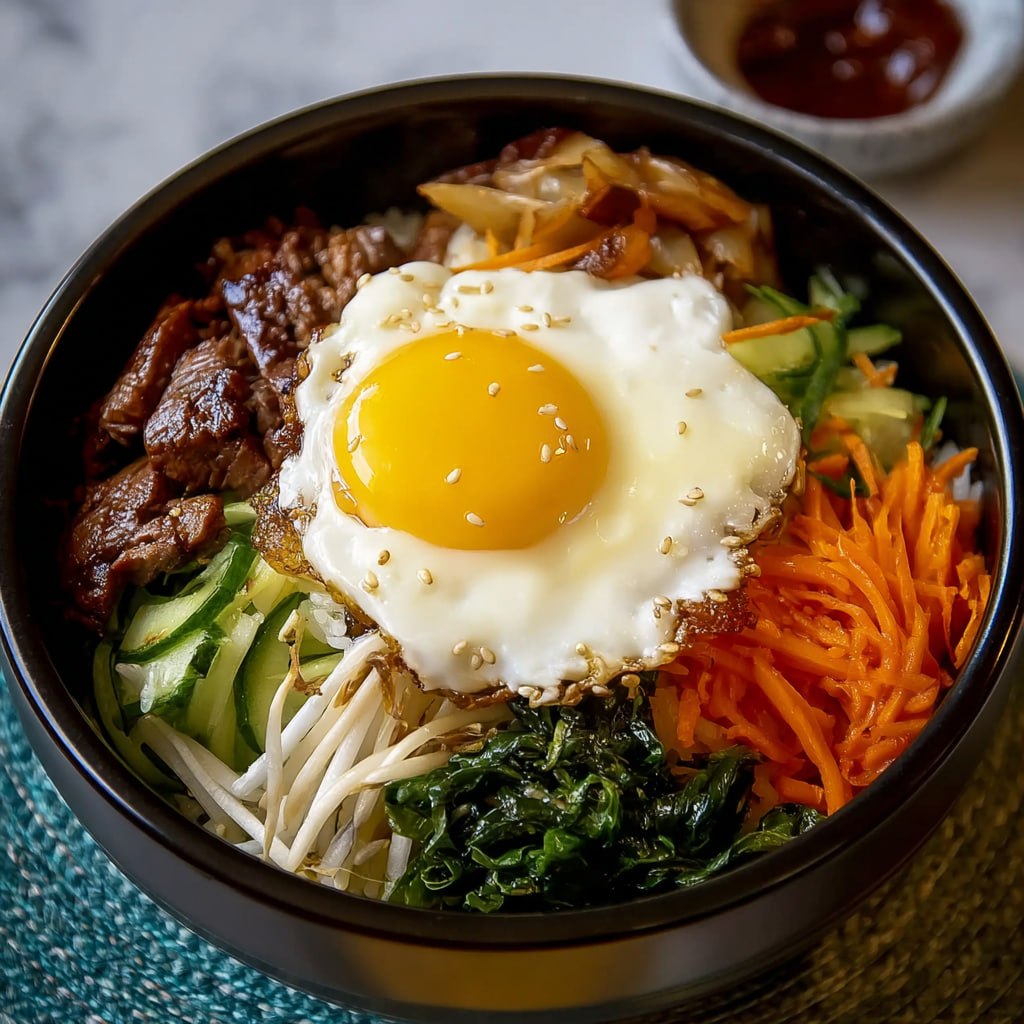
Bibimbap — Korean mixed rice bowl with marinated beef, sautéed vegetables, fried egg, and spicy gochujang sauce. Authentic restaurant-style at home in 50 min.
Did you know that bibimbap — literally “mixed rice” — was named one of the world’s 50 most influential dishes by CNN, and that the prized version (dolsot bibimbap, served in a hot stone bowl) creates a crispy rice bottom called nurungji that’s eaten last as the dish’s reward? Bibimbap is the masterpiece of vegetable-forward eating: a base of warm rice topped with brilliantly colored namul (sautéed seasoned vegetables), marinated beef, a sunny-side-up egg with a runny yolk, sesame seeds, and a punchy red gochujang sauce that ties everything together. Mix it all violently, eat with abandon, and you’ll understand why this is Korea’s favorite Sunday dinner. The recipe looks long but each component is fast — total 50 minutes.
Ingredients List
For the rice base:
1 1/2 cups short-grain rice (Korean or Japanese), rinsed
1 3/4 cups water + pinch salt
2 tbsp toasted sesame oil for crispy bottom (if using cast iron)
For the marinated beef (bulgogi-style):
1 lb ribeye or sirloin, very thinly sliced (or ground beef for shortcut)
Use SHORT-GRAIN rice — long-grain doesn’t develop the right sticky-tender base for bibimbap.
Timing
Rice: 20 minutes (cooks while you prep other components). Marinate beef: 15 minutes (during prep). Cook vegetables: 15 minutes. Sear beef + cook eggs + assemble: 10 minutes. Total: 50 minutes — about 30% faster than full-kitchen Korean cooking thanks to parallel prep.
Step 1 — Cook the Rice and Marinate the Beef
Rinse rice 3 times until water clears. Combine with water and salt; bring to boil, cover, simmer 18 minutes, rest 5. Meanwhile, whisk all beef marinade ingredients. Toss with sliced beef. Marinate 15 minutes.
Step 2 — Sauté the Namul Vegetables
Cook each veg separately for distinct flavor (Korean tradition). Spinach: blanch 30 sec, squeeze dry, season with 1 tbsp soy + 1 tbsp sesame oil + 1 garlic + sesame seeds. Carrots: sauté 3 min in oil, salt. Mushrooms: sauté 4 min, season with soy + sesame oil. Zucchini: sauté 2 min, salt. Bean sprouts: blanch 1 min, season with sesame oil + garlic. Cucumber: stay raw, salt + sesame oil + sesame seeds.
Step 3 — Whisk the Gochujang Sauce
Combine all sauce ingredients in a small bowl. Taste and adjust — should be punchy, sweet-spicy, and just slightly thicker than soy sauce. Add water teaspoon by teaspoon if needed.
Step 4 — Sear the Marinated Beef
Heat 1 tbsp oil in a skillet over high heat until smoking. Add beef in a single layer; sear 3 minutes, tossing occasionally, until caramelized and cooked through. The marinade will sizzle and form a glaze.
Step 5 — Fry the Eggs Sunny-Side-Up
In a non-stick skillet, heat 1 tbsp oil over medium. Crack eggs in one at a time. Cook 3 minutes — whites set, yolks still runny. Sprinkle with salt.
Step 6 — Assemble the Bibimbap
For dolsot-style: heat a cast iron bowl over medium-high; add 1/2 tbsp sesame oil; press warm rice into the bowl. Top with neat piles of beef and each vegetable arranged like spokes of a wheel. Add fried egg in the center. Drizzle with gochujang sauce. Sprinkle sesame seeds, scallions, and nori. Listen for the rice crackle = nurungji forming. Serve immediately. To eat: stir vigorously to combine everything before each bite.
Nutritional Information
Calories: 620 per serving (serves 4)
Protein: 34 g
Fat: 20 g
Carbs: 78 g
Fiber: 7 g
Iron: 30% DV
Vitamin A: 120% DV (carrots + spinach)
Vitamin C: 40% DV
The rainbow of vegetables makes this one of the most nutrient-dense complete-meal bowls you’ll ever eat — over 5 servings of vegetables in one sitting.
Healthier Alternatives for the Recipe
Use brown rice for triple the fiber (cook 40 min instead of 18). Replace beef with marinated tofu or tempeh for vegetarian/vegan. Skip the egg and add extra mushrooms for vegan. Use cauliflower rice for low-carb (sauté 5 min). Use tamari instead of soy sauce for gluten-free. Reduce sodium by using low-sodium soy sauce.
Serving Suggestions
Serve traditionally in a dolsot (hot stone bowl) for the famous crispy rice bottom — cast iron skillets work as a substitute. Add kimchi on the side for the full Korean spread. Pour a cold Korean lager (Hite, Cass) or soju. For dinner parties, set up a build-your-own bibimbap bar with all components in separate bowls. Pair with miso soup or simple cucumber salad.
Common Mistakes to Avoid
Mixing veggies together while cooking — kills the distinct flavors. Cook each separately.
Long-grain rice — doesn’t get the right tender-sticky texture. Short-grain only.
Hard yolk — runny yolk is the sauce binder. 3 minutes max.
Too much gochujang at first — start with 1 tbsp per bowl; add more after tasting.
Overcooking beef — should be just-cooked and caramelized. 3 minutes high heat.
Storing Tips for the Recipe
Store components separately in airtight containers up to 4 days. Reheat rice and beef separately; assemble fresh with veggies and a fresh fried egg. Make-ahead-tip: all veggies can be prepped 2 days ahead; beef marinates well overnight. Freezer: rice freezes 1 month; veggies don’t freeze well. Best assembled and eaten immediately for the runny egg and crispy rice bottom.
Conclusion
Bibimbap is the Korean masterpiece that turns vegetable cooking into an art form: each namul seasoned distinctly, marinated beef searing in caramel-soy glaze, runny egg, and gochujang heat tying everything together. Master the parallel-prep technique and the dolsot crispy-rice trick, and you’ve unlocked a globally-loved dinner formula that’s vibrant, balanced, and infinitely customizable. Try it tonight, photograph the rainbow bowl before mixing, comment with your favorite veggie combo, and subscribe for more 50-minute global classics.
FAQs
Substitute for gochujang? 1 tbsp Sriracha + 1 tbsp white miso + 1 tsp brown sugar approximates the umami-spicy.
Vegetarian version? Sub firm tofu (cubed, marinated, pan-seared) for beef.
Without dolsot? Use a hot cast iron skillet — you’ll still get crispy rice bottom.
Where to buy gochujang? Asian markets, Whole Foods, most major grocery stores’ international aisle.
Can I use leftover rice? Yes — cold day-old rice actually crisps better in the dolsot.
Gluten-free? Use tamari instead of soy sauce; check that your gochujang is GF.