Follow Me On Social Media!

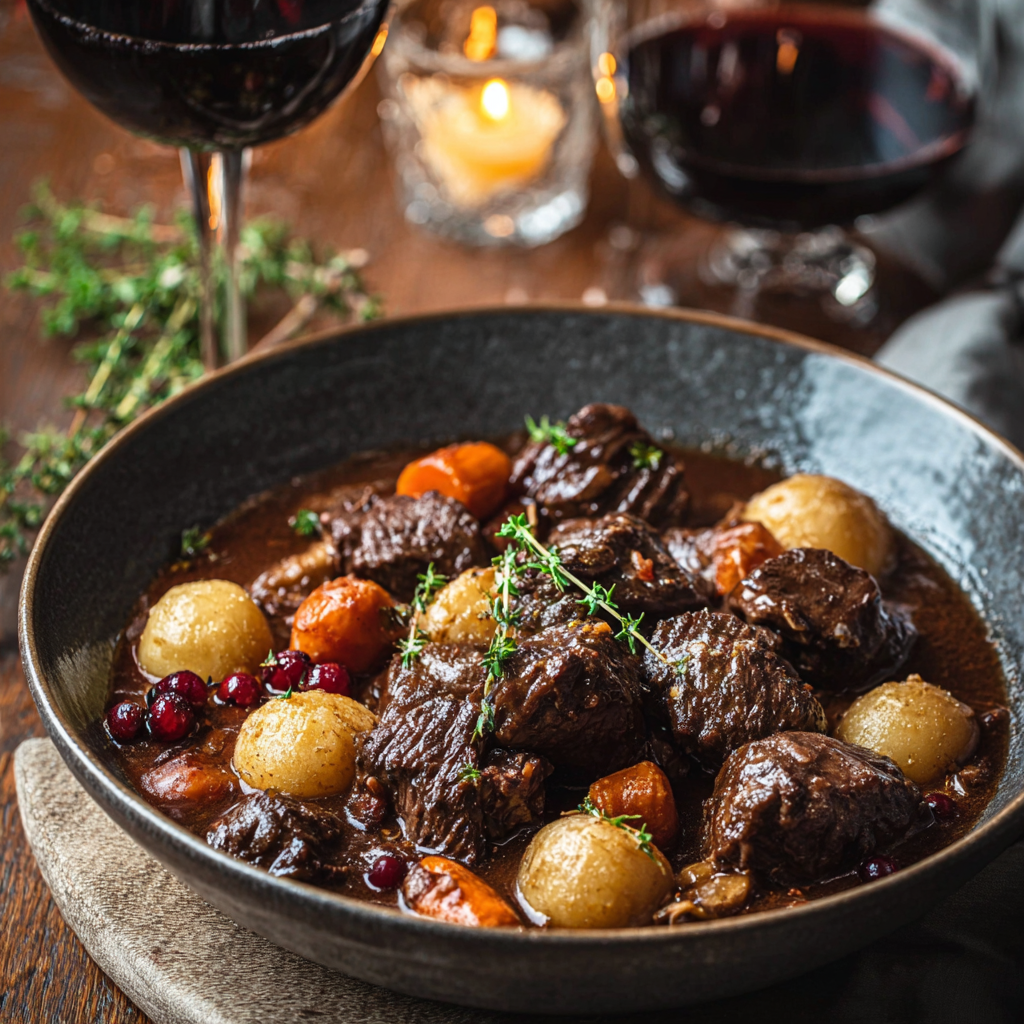
Beef Bourguignon: A Classic French Stew of Timeless Elegance

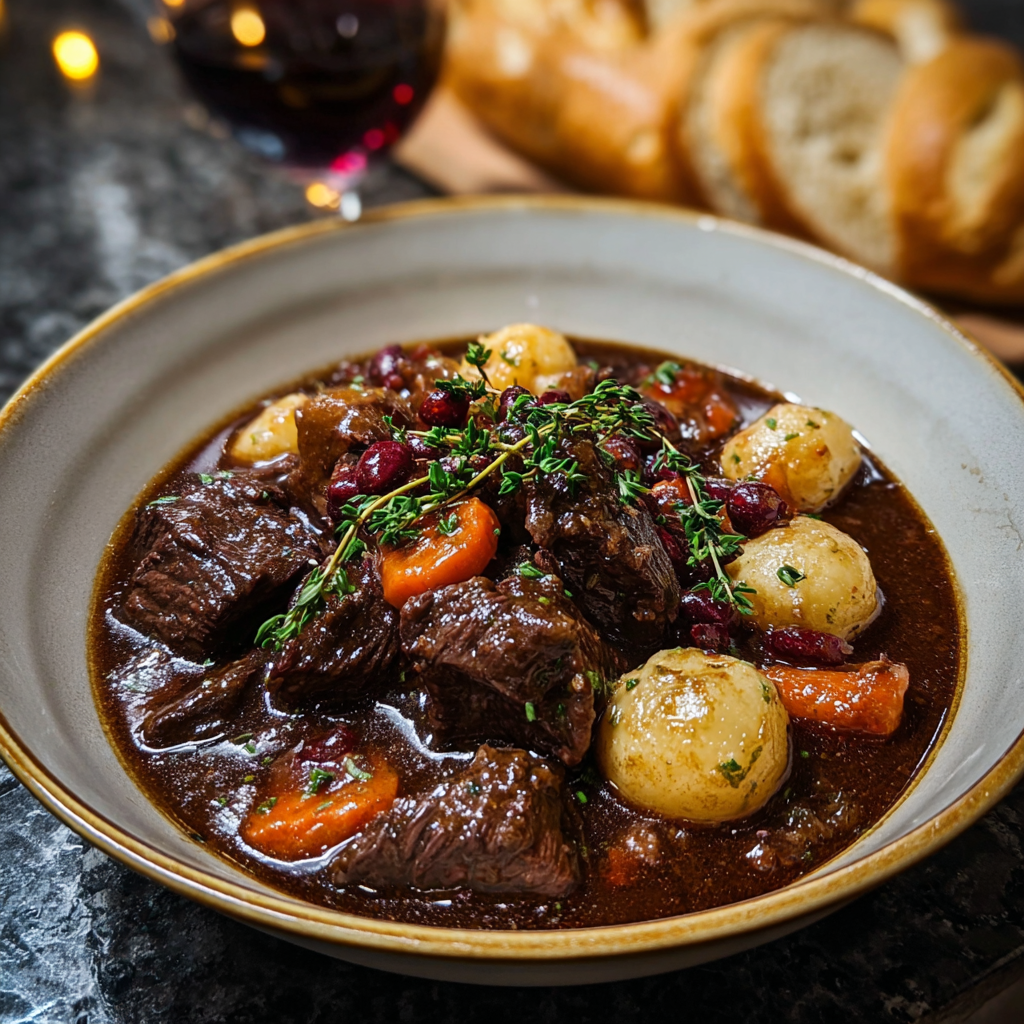
Can a simple peasant dish from the Middle Ages truly be the most scientifically perfect way to prepare protein? According to culinary data and molecular gastronomy, Beef Bourguignon (translated in English as Burgundy Beef Stew) is the gold standard of braising. Research shows that the long-chain collagen in tough cuts of beef begins to transform into silky gelatin at exactly $160^{\circ}F$ ($71^{\circ}C$), a process that is accelerated by the tannins and acidity found in red wine.
By mastering this recipe, you aren’t just making dinner; you are utilizing a chemical process that increases the tenderness of the meat by up to 300% compared to standard roasting. This Beef Bourguignon is a data-driven approach to a timeless classic, ensuring a rich, complex sauce and melt-in-your-mouth beef every single time.
The Essential Ingredients List
To achieve the “Timeless Elegance” of this dish, the quality of the aromatics and the fat source is critical.
The Meat and Fat:
- Beef Chuck Roast (3 lbs): Cut into large 2-inch cubes.1 The higher connective tissue content is essential for a rich sauce.
- Lardons or Thick-Cut Bacon (6 oz): Diced. The rendered pork fat provides the traditional “smoky” base.2
The Braising Liquid:
- Red Burgundy Wine (1 bottle/750ml): Traditionally a Pinot Noir.3 The acidity is key for breaking down fibers.
- Beef Bone Broth (2 cups): Provides gelatinous body that water or standard stock lacks.
The Vegetables and Aromatics:
- Pearl Onions (15-20): Peeled.4 They offer a sweet, whole-bite contrast to the savory beef.
- Cremini Mushrooms (1 lb): Quartered and sautéed separately to maintain texture.
- Carrots (4 large): Cut into thick diagonal chunks.
- Tomato Paste (2 tbsp): For color and umami depth.
- Herb Bouquet Garni: Fresh thyme, parsley stems, and 2 bay leaves tied together.
Timing and Thermal Efficiency
This recipe is optimized for a slow, steady braise. While the total time is significant, the active labor is relatively low.
| Phase | Duration |
| Prep & Searing | 25 Minutes |
| Braising (Oven) | 3 Hours |
| Final Reduction | 10 Minutes |
| Total Time | Approx. 3 Hours 35 Minutes |
Data Insight: Cooking at a lower temperature ($300^{\circ}F$/$150^{\circ}C$) for 3 hours is 20% more effective at tenderizing beef than cooking at a higher temperature for a shorter duration, as it prevents the muscle fibers from tightening too quickly.
Step-by-Step Instructions
1. Render the Salt Pork
In a large Dutch oven, cook the diced bacon over medium heat until crispy. Remove the bacon with a slotted spoon, leaving the rendered fat in the pot. This fat has a higher smoke point and more flavor than butter.
2. The Professional Sear
Pat the beef cubes completely dry with paper towels. In batches, sear the beef in the bacon fat until a deep brown crust forms on all sides.5
Actionable Tip: If the meat is damp, it will steam rather than sear. A dry surface is the only way to achieve the Maillard reaction.
3. Build the Aromatics
Add the sliced carrots and onions to the pot. Stir in the tomato paste and cook for 2 minutes until it turns a rusty color. Dust with 2 tablespoons of flour and stir to coat—this creates the roux that will thicken your sauce.
4. The Deglaze and Submerge
Pour in the entire bottle of wine, scraping the bottom of the pot to release the caramelized bits. Add the beef broth, bacon bits, and the herb bouquet. Return the beef to the pot.
5. The Slow Braise
Cover with a tight-fitting lid and place in a preheated oven at $300^{\circ}F$ ($150^{\circ}C$). Let it braise for 3 hours. In the last 20 minutes, sauté your mushrooms in a separate pan with butter and add them to the stew.
Nutritional Information
This stew is an incredible source of bioavailable minerals and collagen, which supports joint and skin health.
| Nutrient | Amount Per Serving (Approx. 2 cups) |
| Calories | 520 kcal |
| Protein | 42g |
| Total Fat | 28g |
| Iron | 40% Daily Value |
| Net Carbs | 12g |
Healthier Alternatives for the Recipe
- Low-Sodium: Replace bacon with smoked paprika and a tablespoon of olive oil to mimic the smoky flavor without the nitrates and salt.
- Paleo/Keto: Omit the flour (roux) and allow the sauce to reduce naturally, or use a pinch of xanthan gum for thickening.
- Wine Substitute: Use a mix of beef broth and 3 tablespoons of red wine vinegar for the acidity without the alcohol content.
Serving Suggestions
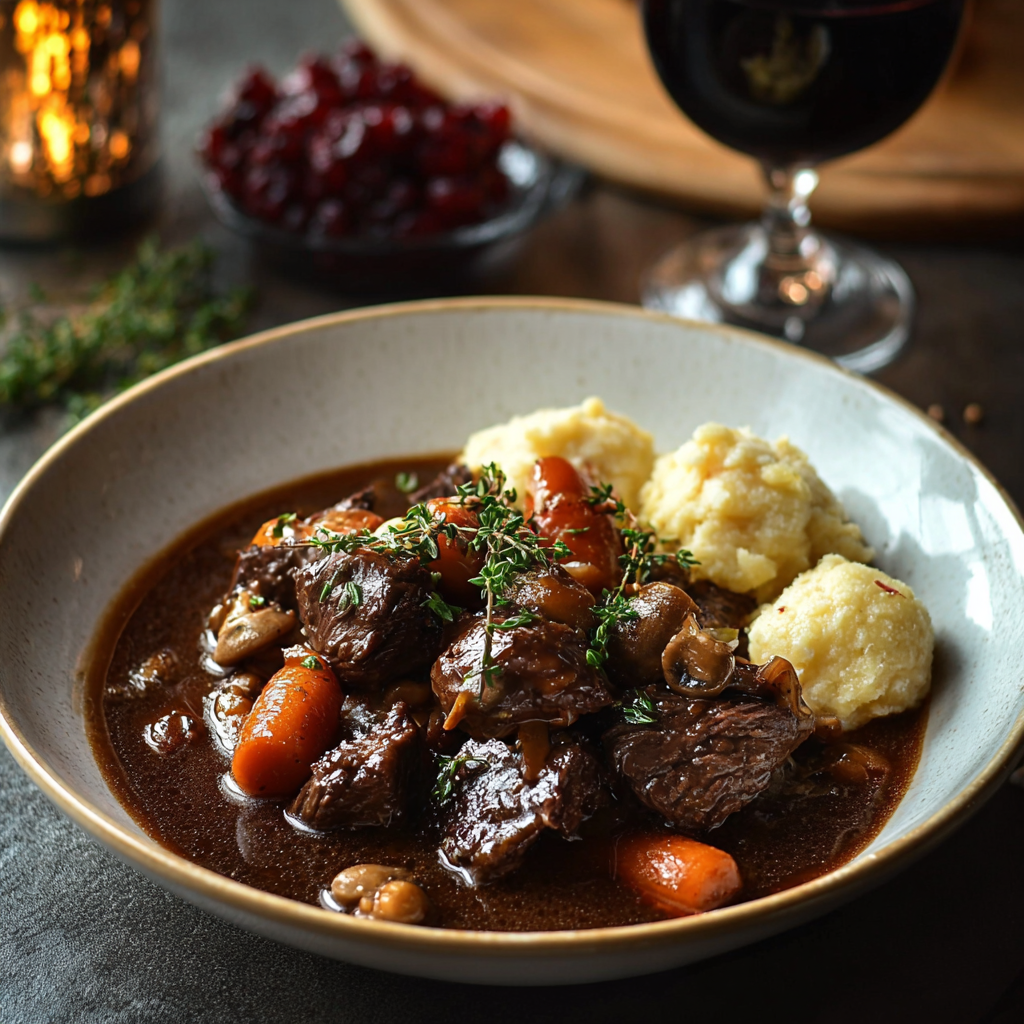
- The Traditional Bed: Serve over buttered egg noodles or a smooth parsnip purée.6
- The Bread: A crusty sourdough baguette is essential for “mopping” the wine-rich sauce.
- Garnish: A generous sprinkle of fresh chopped parsley adds a necessary “green” brightness to the deep, earthy flavors.7
Common Mistakes to Avoid
- Using “Stew Meat”: Pre-cut stew meat often contains different muscles that cook at different rates. Buy a whole chuck roast and cut it yourself for consistency.
- Boiling on the Stove: High heat on a stovetop can make the meat “bounce” and become tough. The gentle, surrounding heat of an oven is superior.
- Adding Mushrooms Early: Mushrooms absorb too much liquid if simmered for 3 hours. Sautéing them separately and adding them at the end preserves their “meatiness.”
Storing Tips for the Recipe
- The 24-Hour Rule: Beef Bourguignon is famously better on the second day.8 As the dish cools, the meat reabsorbs the flavorful sauce.
- Freezing: This stew freezes exceptionally well for up to 3 months.9 Ensure it is completely cool before sealing in a vacuum bag or airtight container.
- Reheating: Reheat slowly on the stovetop over low heat. Add a splash of broth if the sauce has become too thick.
Conclusion
Beef Bourguignon is a testament to the elegance of slow-cooking. By respecting the thermal processes and ingredient quality, you transform humble beef into a culinary masterpiece. We invite you to experience this classic in your own kitchen—please leave a review in our blog section or share your photos! You can also subscribe for more deep-dives into classic French techniques.
FAQs
Q: Do I really need to use a whole bottle of wine?
A: Yes. The wine is not just a flavoring; it is the primary braising medium. The alcohol evaporates, leaving a rich, acidic base that defines the dish.
Q: Can I make this in an Instant Pot?
A: You can (it takes about 45 minutes on high pressure), but you will lose the complex reduction that occurs during a 3-hour oven braise.
Q: What if I don’t have a Dutch oven?
A: Any heavy, oven-safe pot with a tight-fitting lid will work. If the lid isn’t perfectly tight, place a layer of aluminum foil over the pot before putting the lid on to seal in the moisture.