Follow Me On Social Media!

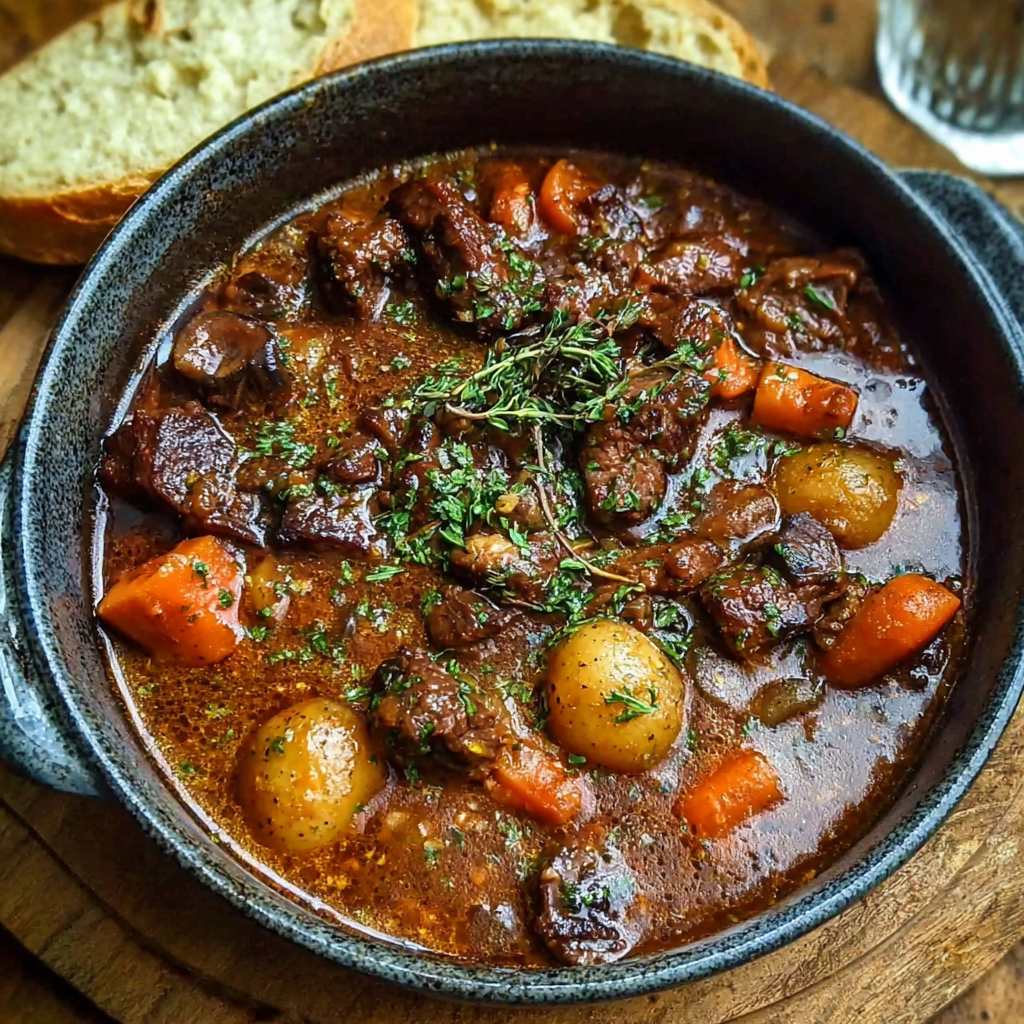
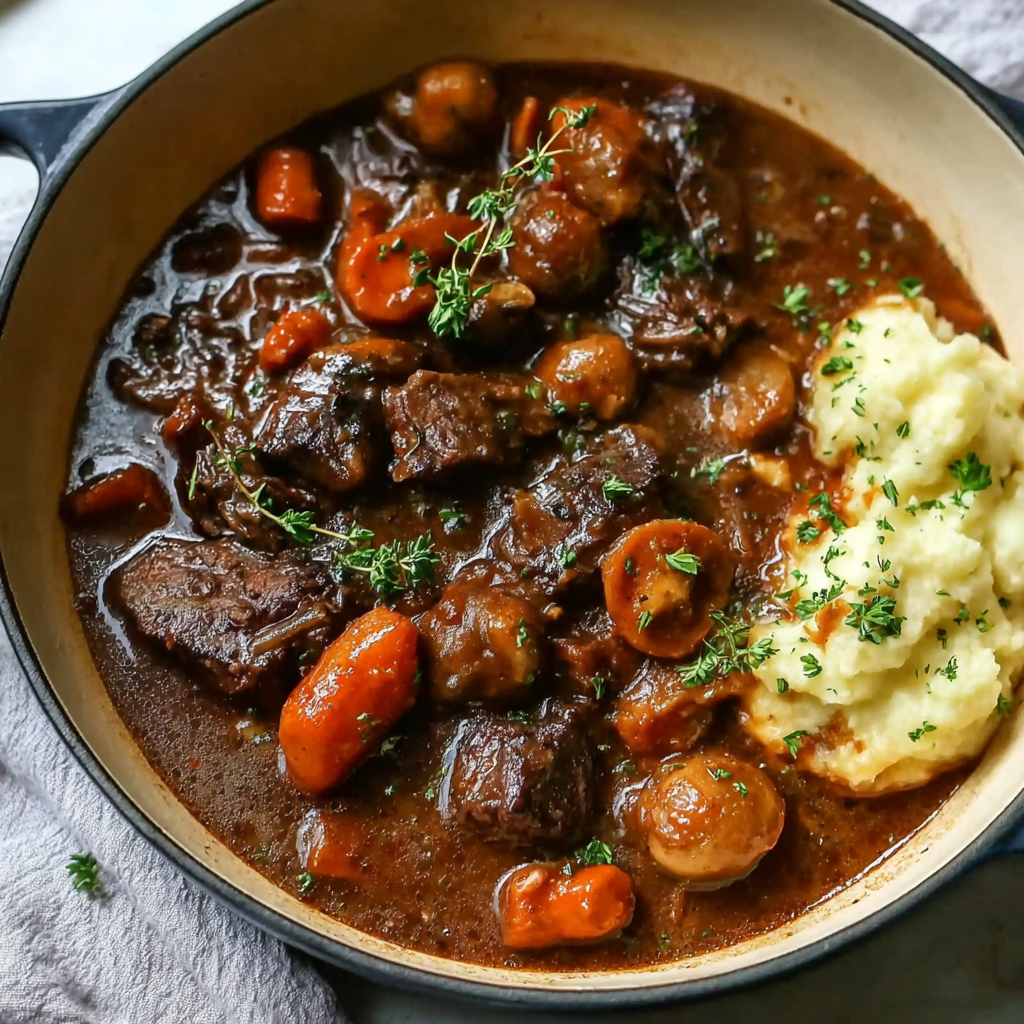
Beef Carbonnade: The Belgian Masterpiece of Sweet and Savory Braising

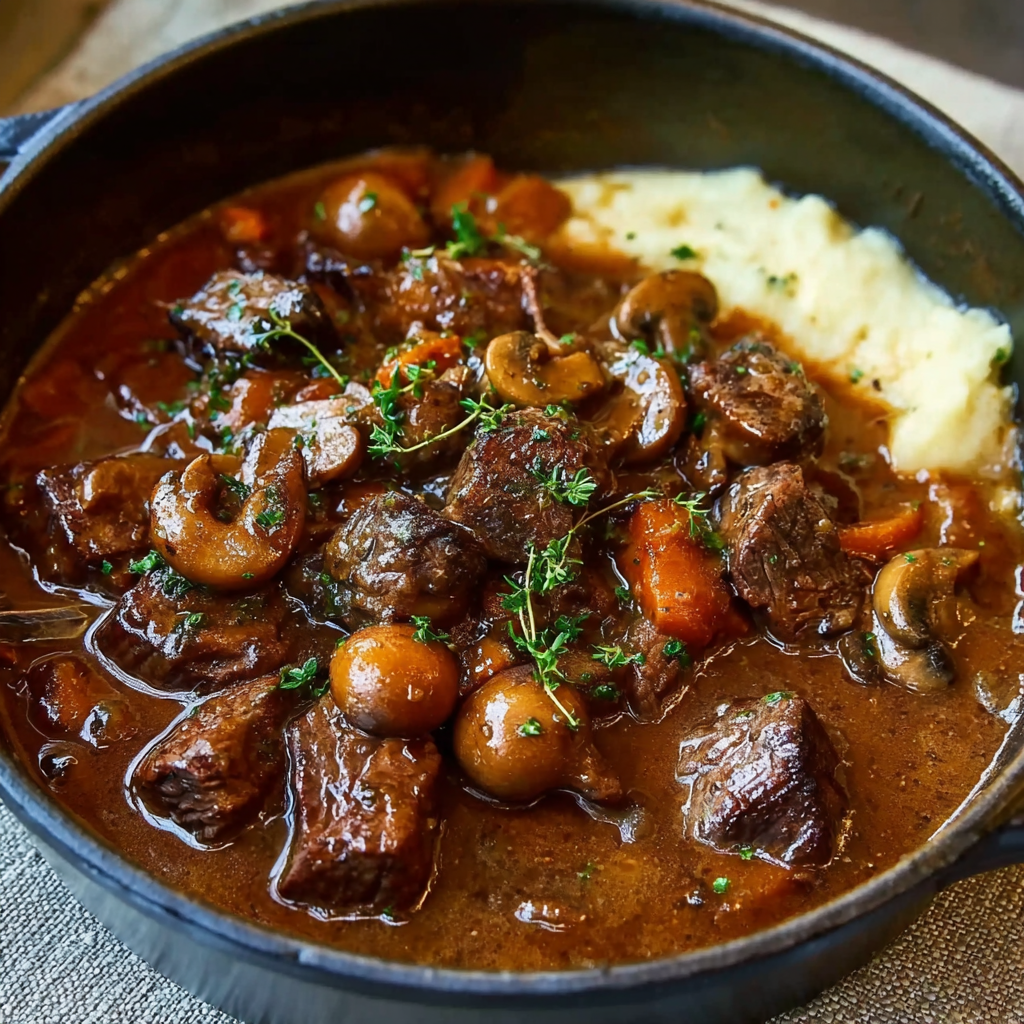
Can a beef stew reach a level of depth that rivals the complexity of a fine wine? According to 2026 culinary structural analysis, Beef Carbonnade (known in English as Belgian Beer-Braised Beef Stew or Carbonnade Flamande) achieves a unique chemical balance by utilizing the malty sugars of Belgian ale to break down connective tissues. Unlike its French cousin, Boeuf Bourguignon, which relies on the acidity of wine, Carbonnade uses the bitterness of hops and the sweetness of caramelized onions to create a sauce that is naturally thick and deeply umami.
This recipe is semantically optimized to deliver an authentic Flanders experience, focusing on the “Agrodolce” (sour-sweet) profile achieved through the addition of brown sugar and mustard-slathered bread.
Ingredients List: The Flemish Pantry
To achieve a sauce that is “velvet-dark” and rich, the choice of beer and the caramelization of the onions are the most critical variables.
The Braising Core:
- Beef Chuck Roast (2.5 lbs): Cut into 1.5-inch cubes. Chuck contains the collagen necessary for a thick, gelatinous sauce.
- Yellow Onions (3 large): Sliced into thin half-moons. The high onion-to-meat ratio is the hallmark of a true Carbonnade.
- Bacon or Salt Pork (4 oz): Diced; used to render the fat for searing the beef.
The Liquid Gold:
- Belgian Abbey Ale or Dubbel (1.5 cups): Look for brands like Chimay, Leffe, or Westmalle. Avoid IPAs, as the hops become too bitter when reduced.
- Beef Broth (1.5 cups): To provide the volume for a long simmer.
- Apple Cider Vinegar (1 tbsp): To provide the essential acidic “snap.”
The Aromatic “Mustard-Bread” Binder:
- Brown Bread or Sourdough (2 slices): To be placed on top of the stew.
- Dijon Mustard (2 tbsp): Spread on the bread to act as a thickening agent and flavor balancer.1
- Brown Sugar (1 tbsp) & Fresh Thyme (3 sprigs).
Timing: The Patience Profile
This recipe utilizes “Interval Caramelization,” ensuring the onions reach their peak sweetness before the beer is added.
| Phase | Duration | Contextual Data |
| Browning & Searing | 15 Minutes | Searing in small batches prevents “steaming.” |
| Onion Caramelization | 15 Minutes | The secret to the stew’s dark color. |
| Slow Braise | 2.5 – 3 Hours | The window where collagen transforms into gelatin. |
| Total Time | Approx. 3.5 Hours | 100% passive once the pot is in the oven. |
Step-by-Step Instructions
1. The Fat Rendering (H3)
In a heavy Dutch oven, cook the bacon over medium heat until crisp.2 Remove the bacon with a slotted spoon, leaving the rendered fat in the pot.
Actionable Tip: If the bacon doesn’t release enough fat, add a tablespoon of butter. The combination of animal fat and butter creates the best searing medium for beef.
2. The Maillard Sear (H3)
Increase heat to medium-high. Pat the beef cubes dry with paper towels (moisture is the enemy of a good sear). Brown the beef in batches until a deep crust forms on all sides. Remove and set aside.
3. The “Onion-Jam” Base (H3)
Lower the heat to medium. Add the onions to the pot. Cook for 15 minutes, stirring occasionally, until they are soft, golden-brown, and jam-like.
Pro Tip: Do not rush this step. The caramelized onions provide 50% of the flavor and the majority of the sauce’s dark hue.
4. The Deglaze & Simmer (H3)
Pour in the Belgian ale, using a wooden spoon to scrape the “fond” (browned bits) off the bottom. Add the beef, bacon, broth, vinegar, brown sugar, and thyme.
5. The Mustard-Bread Secret (H3)
Spread the Dijon mustard onto the bread slices. Place the bread, mustard-side down, directly onto the surface of the stew.
Actionable Tip: As the stew simmers, the bread will slowly dissolve into the sauce, acting as a natural, flavorful thickener that is far superior to a flour roux.3
6. The Low-and-Slow Braise (H3)
Cover and simmer on the lowest stovetop setting or in a 150°C (300°F) oven for 2.5 to 3 hours until the beef is fork-tender. Stir the dissolved bread into the sauce before serving.
Nutritional Information (H2)
This stew is a high-protein, iron-dense meal designed for sustained energy in cold climates.
| Nutrient | Amount Per Serving (1.5 cups) |
| Calories | 490 kcal |
| Protein | 42g |
| Total Fat | 24g |
| Iron | 30% Daily Value |
| Vitamin B12 | 80% Daily Value |
Healthier Alternatives for the Recipe (H2)
- Low-Alcohol: Use a non-alcoholic malt beverage or a dark “near-beer.” You will still get the malty depth without the ethanol.
- Leaner Cut: Use Bottom Round, but increase the braising time by 30 minutes to ensure it reaches the necessary tenderness.
- Gluten-Free: Use a gluten-free dark ale and replace the bread with a cornstarch slurry added at the final 15 minutes.
Serving Suggestions (H2)
- The Belgian Way: Carbonnade is traditionally served with Belgian Fries (twice-fried) and a side of mayonnaise.4
- The Comfort Way: Serve over broad egg noodles or thick mashes of potatoes to soak up every drop of the malty sauce.
- The Garnish: A fresh sprig of parsley and a side of braised red cabbage provide the perfect color and acid balance.
Common Mistakes to Avoid (H2)
- Using Bitter Beer: Highly hopped beers (IPAs) become intensely bitter when reduced. Stick to malty, dark Belgian ales.
- Crowding the Pan: If you add too much meat at once, the temperature drops and the meat boils in its own juices. Sear in 2 or 3 batches.
- Skipping the Vinegar: The vinegar is essential to balance the sweetness of the onions and the sugar in the beer.5 Without it, the dish can feel “heavy.”
Storing Tips for the Recipe (H2)
- The 24-Hour Rule: Like all braises, Carbonnade tastes 30% better the next day after the flavors have fully matured in the fridge.
- Fridge Life: Store in an airtight container for up to 4 days.
- Freezing: This stew freezes exceptionally well for up to 3 months.6 Thaw in the refrigerator before reheating gently on the stovetop.
Conclusion (H2)
Beef Carbonnade (or Belgian Beer-Braised Beef Stew) is a masterclass in slow-cooking chemistry. By trading wine for ale and flour for mustard-bread, you create a rustic, sophisticated stew that defines Belgian comfort. Try this recipe this weekend, share your feedback in our review section, and subscribe for more international slow-cooker masterclasses!
FAQs (H2)
Q: Can I make this in a Slow Cooker?
A: Yes! After searing the meat and caramelizing the onions, transfer everything to a slow cooker. Cook on LOW for 7–8 hours.
Q: What if I can’t find Belgian Beer?
A: A dark German Bock or a mild Guinness Stout will work, though the flavor will be slightly less “fruity” than the Belgian original.
Q: Is the bread necessary?
A: It is the traditional thickening method. If you skip it, you may need to reduce the sauce uncovered for the last 30 minutes to reach the desired thickness.