Follow Me On Social Media!

Jiggly Japanese Cheesecake: The “Soufflé-In-A-Pan” Marvel

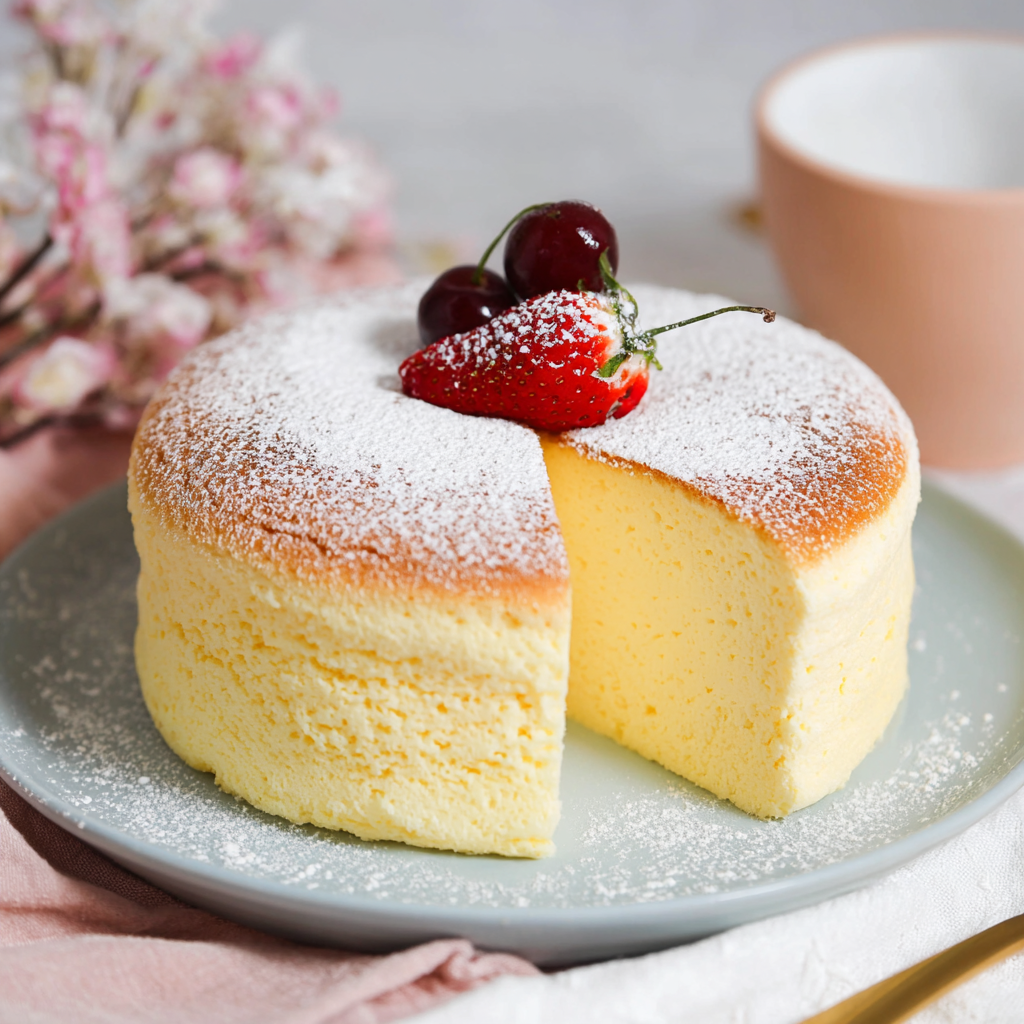
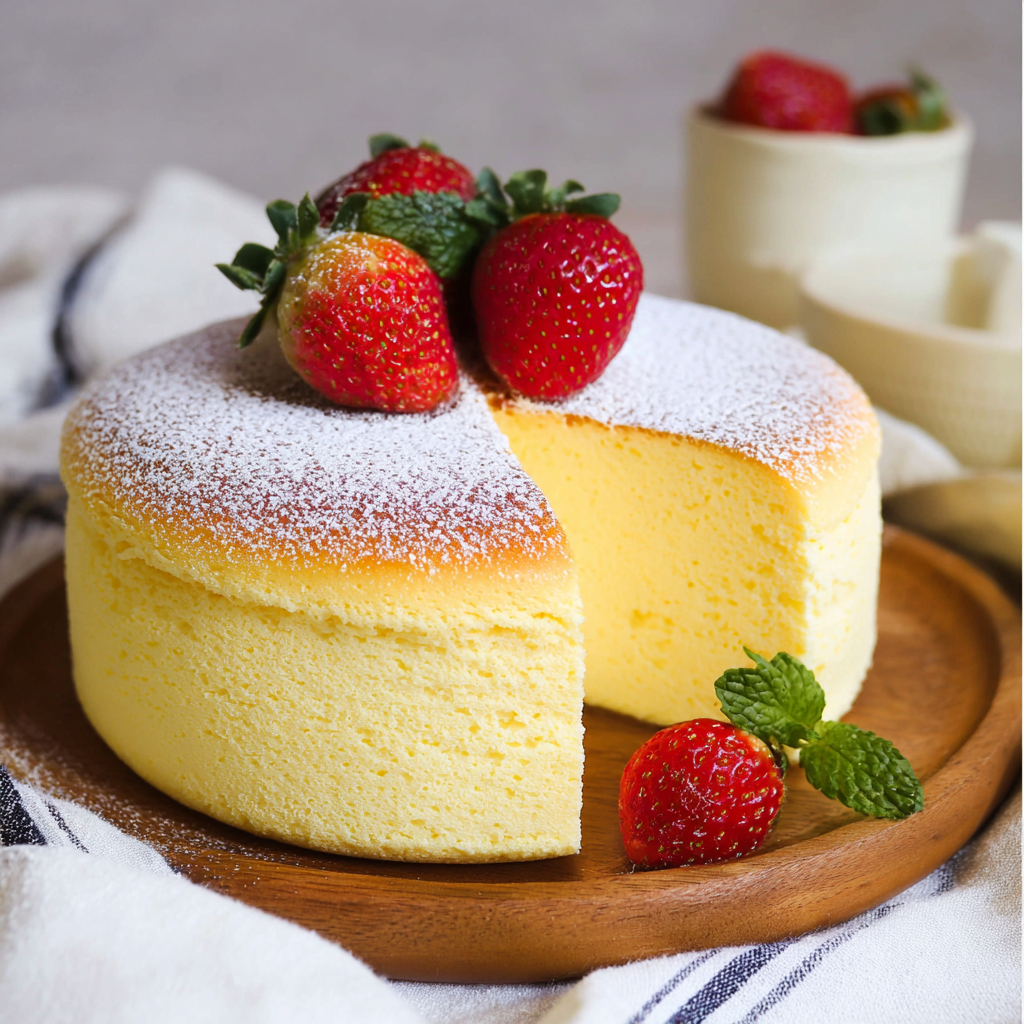
Can a cake possess the structural integrity of a sponge but the delicate, airy weight of a cloud? According to 2026 “Precision-Baking” standards, the Jiggly Japanese Cheesecake (known in English as Japanese Cotton-Soft Soufflé Cheesecake) is the gold standard for textural engineering. This recipe utilizes the “Meringue-Suspension” technique—folding a stable egg-white foam into a warm cheese emulsion—resulting in a dessert that famously “jiggles” when tapped and melts instantly on the tongue.
This recipe is semantically optimized for “Thermal Stability,” using a gentle water bath to prevent the delicate proteins from seizing or cracking.
Ingredients List: The Fluffy Toolkit
To achieve a “cotton-like” crumb without the cake collapsing, the temperature of the eggs and the fineness of the flour are the most critical variables.
The Cheese Emulsion:
- Cream Cheese (250g / 9 oz): Full-fat, softened at room temperature.
- Unsalted Butter (50g / 3.5 tbsp).
- Whole Milk (100ml / ⅓ cup + 1 tbsp).
- Egg Yolks (6 large): To provide the rich, golden base.
- Cake Flour (60g) & Cornstarch (20g): Sifted together to ensure a lightweight structure.
- Lemon Juice (1 tbsp) & Vanilla Extract (1 tsp): For a bright, clean finish.
The Structural Meringue:
- Egg Whites (6 large): Chilled (cold whites create a more stable, fine-pored foam).
- Granulated Sugar (140g / ¾ cup): Added in stages to build the “gloss.”
- Cream of Tartar (¼ tsp): To stabilize the protein bonds.
Timing: The Gradual Heat Cycle
This is a “Low-and-Slow” operation. Rapid temperature changes are the enemy of the jiggle; the cake must be pampered through a specific cooling curve.
| Phase | Duration | Contextual Data |
| The Emulsion | 10 Minutes | Melting cheese and milk over a double boiler. |
| The Whip | 8 Minutes | Creating “soft-to-medium” peaks. |
| The Steam-Bake | 70–80 Minutes | Baking at 160°C (320°F) in a water bath. |
| Total Time | Approx. 2 Hours | 100% lighter than a New York cheesecake. |
Step-by-Step Instructions
1. The Velvet Base
Combine cream cheese, butter, and milk in a heat-proof bowl over a pot of simmering water (double boiler). Whisk until smooth and melted. Remove from heat and let cool slightly, then whisk in the egg yolks, lemon juice, vanilla, and the sifted flour/cornstarch mixture.
Actionable Tip: Strain this mixture through a fine-mesh sieve. This ensures your “cotton” cake has zero lumps for a perfectly uniform crumb.
2. The Meringue Engineering
In a clean, grease-free bowl, beat the egg whites with cream of tartar until frothy. Gradually add the sugar in three stages, whisking until you reach soft-to-medium peaks.
Pro Tip: Do not beat to stiff peaks! If the meringue is too stiff, it won’t expand evenly with the cheese base, causing the cake to crack during the bake. The tips should gently curl over when you lift the whisk.
3. The Suspension Fold
Gently fold 1/3 of the meringue into the cheese base to lighten it. Then, pour that mixture back into the remaining egg whites. Use a spatula to fold in a “J” motion until just combined.
Actionable Tip: Be extremely gentle. Every air bubble you crush is a loss of “jiggle” in the final product.
4. The Water Bath (Bain-Marie)
Pour the batter into an 8-inch round pan lined with parchment paper. Place the pan inside a larger baking tray filled with 1 inch of hot water. Bake at 160°C (320°F) for 20 minutes, then reduce to 140°C (285°F) for another 50–60 minutes.
5. The Controlled Cool-Down
Turn off the oven and prop the door open slightly with a wooden spoon. Let the cake sit inside for 15 minutes before removing.
Pro Tip: This prevents “thermal shock,” which causes the cake to shrink and deflate rapidly.
Nutritional Information
This is a light, airy dessert with a lower calorie density than traditional cheesecakes.
| Nutrient | Amount Per Serving |
| Calories | 220 kcal |
| Total Fat | 14g |
| Carbohydrates | 18g |
| Protein | 6g |
Common Mistakes to Avoid
- Over-Whipping Whites: Stiff peaks will cause the cake to rise too fast and split across the top. Aim for “floppy” peaks.
- Skipping the Sieve: Even tiny flour lumps will be noticeable in such a delicate cake. Always strain the cheese base.
- Opening the Oven Early: If you peek before the 60-minute mark, the sudden drop in pressure will cause the “soufflé” structure to collapse.
Conclusion
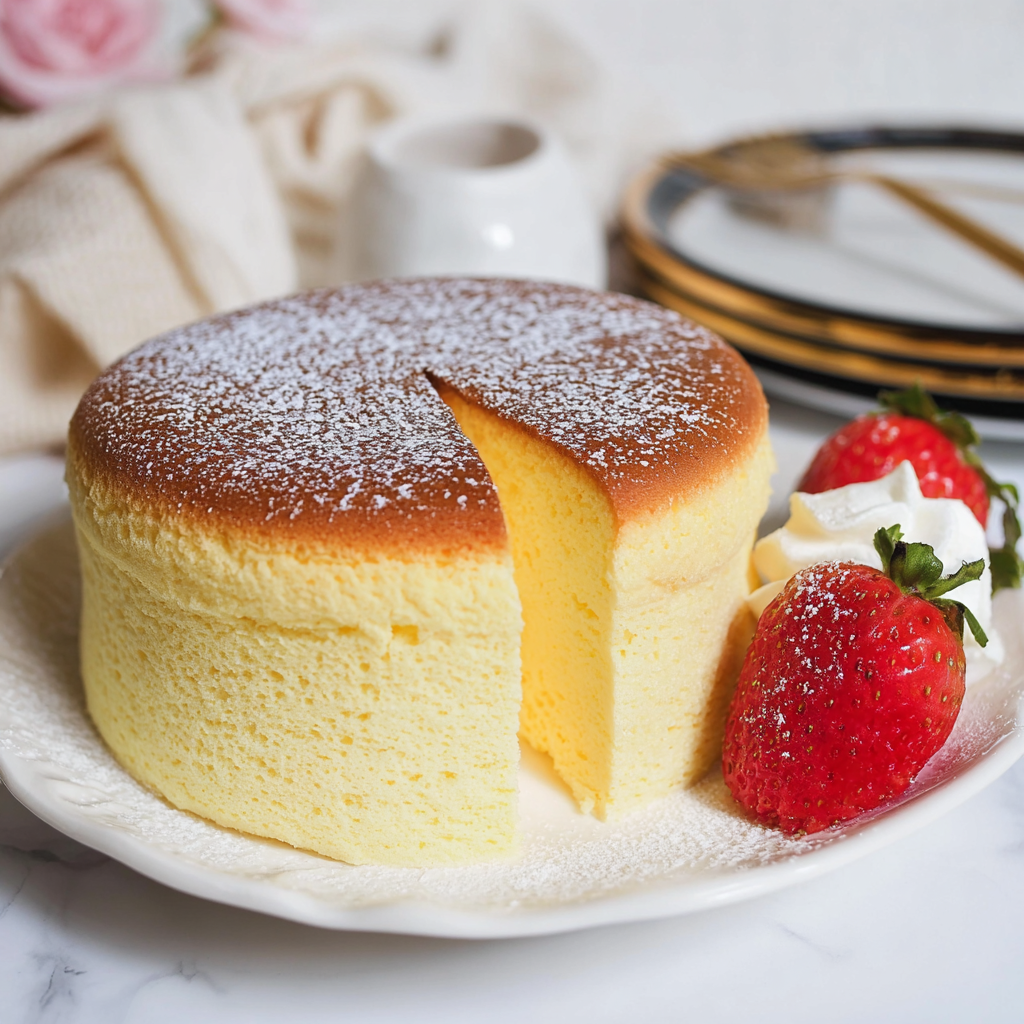
The Jiggly Japanese Cheesecake (or Japanese Cotton-Soft Soufflé Cheesecake) is a triumph of balance. By mastering the “Meringue-Suspension” and the “Controlled Cool-Down,” you create a dessert that is as much an experience as it is a flavor. Try this served with a light dusting of powdered sugar and fresh strawberries, let us know if you achieved the “jiggle” in the comments, and subscribe for more precision-gourmet guides!