
Follow Me On Social Media!

Homemade Greek Salad Dressing (5-Minute Zesty Vinaigrette)
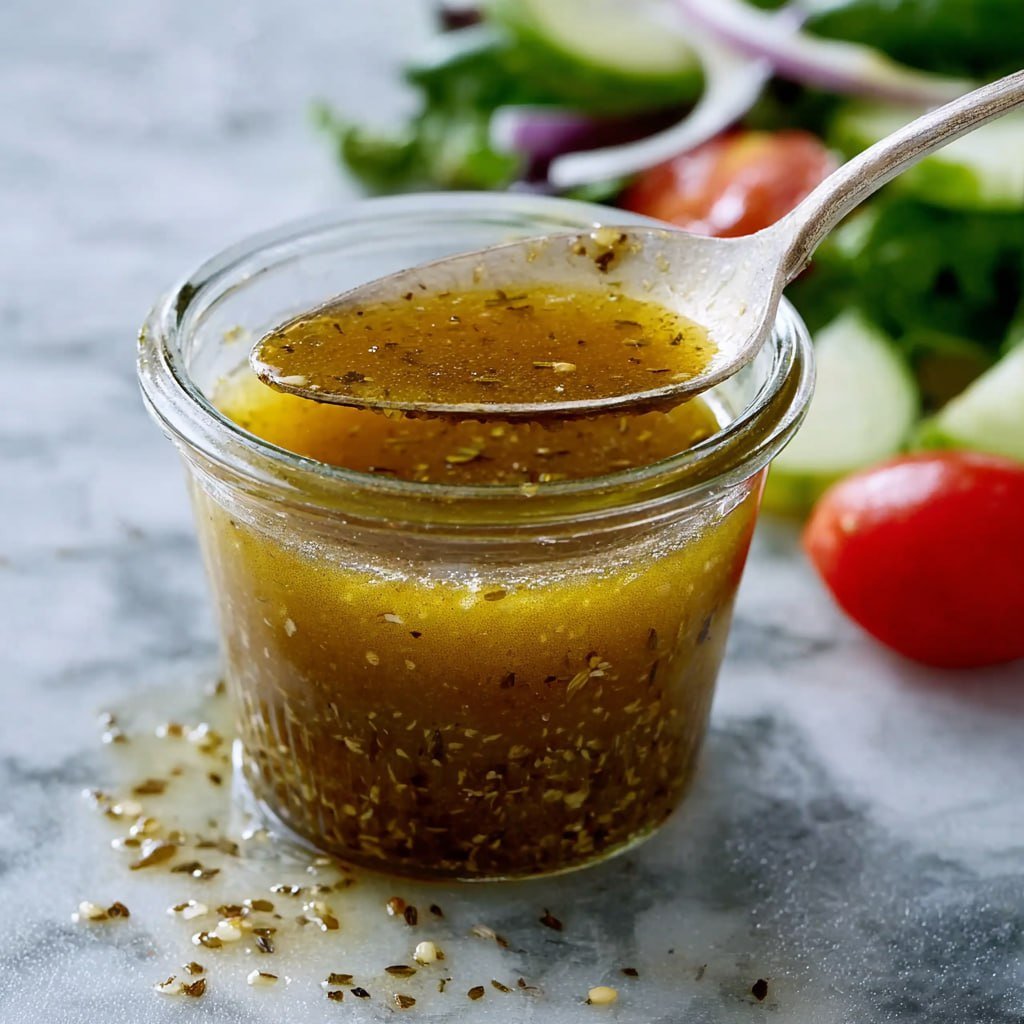
This homemade Greek salad dressing whisks together in 5 minutes with olive oil, red wine vinegar, lemon, and oregano. Bright, tangy, and better than bottled.

If you’ve been buying bottled vinaigrette out of habit, this homemade Greek salad dressing is about to change your entire kitchen routine. I whisk up a jar almost every week because it takes five minutes, uses pantry staples I already have on hand, and honestly tastes like something you’d be served at a sunny taverna on the coast of Santorini. It’s bright, garlicky, herby, and just tangy enough to wake up whatever you drizzle it over.
Fun fact: traditional Greek cooks rarely follow strict measurements for their salad dressings. On the islands, families pour olive oil, splash vinegar, and crumble oregano directly onto the salad in the bowl — the “dressing” happens on the plate itself. This jarred version is my little Americanized shortcut so you can enjoy that same flavor all week long.
Why this recipe works
- The combination of red wine vinegar plus fresh lemon juice creates a layered sourness you simply cannot get from vinegar alone.
- A tiny spoonful of Dijon mustard acts as an emulsifier, so the oil and acid actually stay married together in the jar instead of splitting apart within minutes.
- Dried oregano is bloomed by the acidic ingredients as it sits, which pulls out that unmistakable Mediterranean aroma you know and love.
- Everything comes together in one jar with a lid — no blender, no food processor, no dirty dishes to scrub afterward.
Ingredients
- ½ cup extra virgin olive oil
- 3 tablespoons red wine vinegar
- 2 tablespoons fresh lemon juice
- 1 teaspoon Dijon mustard
- 1 garlic clove, finely minced
- 1 teaspoon dried oregano
- ½ teaspoon dried basil
- ½ teaspoon salt
- ¼ teaspoon black pepper
- A pinch of sugar (optional, to balance the acidity)
Instructions
Step 1: Gather everything in one spot
Pull out a clean glass jar with a tight-fitting lid — a 12-ounce mason jar is perfect. Measure out your olive oil, both acids, and set the small ingredients close by so the process moves quickly.
Step 2: Mince your garlic properly
Take the peeled clove and mince it as finely as your knife skills allow, or push it through a garlic press for the smoothest texture. Larger chunks will sink to the bottom of the jar, so smaller is truly better here.
Step 3: Add the acidic base first
Pour the red wine vinegar, fresh lemon juice, and Dijon mustard into the jar. Adding the acids before the oil helps the mustard dissolve properly and gives you a smoother emulsion in the end.
Step 4: Season the mixture
Sprinkle in the oregano, basil, salt, pepper, and that little pinch of sugar if you’re using it. Add the minced garlic on top of the herbs so nothing sticks to the sides of the jar.
Step 5: Pour and shake
Finally, add the olive oil, screw the lid on firmly, and shake the jar vigorously for a full 30 seconds. You’ll see the mixture turn creamy and pale, which means everything has emulsified beautifully. If you prefer whisking in a bowl, add the oil last in a slow stream while whisking constantly.
Step 6: Rest, taste, and serve
Let the dressing rest on the counter for about 10 minutes so the flavors have time to marry. Give it a quick taste — add another splash of vinegar for extra bite, more oregano for herby depth, or a squeeze more lemon for brightness. Drizzle over your salad right away or refrigerate for up to two weeks.
Nutrition information
- Calories: 122 per 2-tablespoon serving
- Total fat: 13.5g
- Saturated fat: 1.9g
- Carbohydrates: 0.6g
- Sugar: 0.2g
- Protein: 0.1g
- Sodium: 148mg
Pro tips for the best Greek salad dressing
- Never skip the Dijon — it does the invisible heavy lifting of holding the oil and acid together, so your dressing stays creamy instead of separating within minutes.
- Reach for a fresh lemon, not the bottled juice from the shelf. Real lemons carry those aromatic oils in the peel that transfer into the juice as you squeeze, and the flavor difference is honestly night and day.
- Make it a day ahead if you can. The garlic softens overnight, the herbs bloom, and by day two the dressing tastes almost twice as complex as it did fresh.
- Bring the jar to room temperature before serving cold from the fridge — the olive oil will solidify slightly in the cold and needs about 10 minutes on the counter to pour smoothly again.
Frequently asked questions
What sets Greek dressing apart from other vinaigrettes?
The signature trio of red wine vinegar, fresh lemon juice, and generous dried oregano is what defines it. Most vinaigrettes rely on a single acid, and Italian versions swap in a different herb blend built around basil and parsley, so the Greek profile has a much brighter, more resinous character all its own.
Can I use this as a marinade for meat or vegetables?
Yes, and it’s fantastic in that role. It works beautifully on chicken thighs, lamb chops, shrimp skewers, and grilled zucchini or bell peppers. Let proteins soak for at least 30 minutes and up to 4 hours for chicken — any longer and the acid can start to break down the texture.
How long does the dressing keep in the fridge?
Stored in a sealed jar in the refrigerator, it stays fresh and flavorful for up to two weeks. Just give it a good shake before every use since the oil and vinegar will naturally settle over time.
Can I swap the red wine vinegar for something else?
White wine vinegar or apple cider vinegar both work in a pinch, though the flavor will shift slightly. Red wine vinegar gives you that classic Mediterranean depth, so I recommend keeping a bottle on hand if you plan to make this often.
Is this dressing gluten-free and dairy-free?
Absolutely — every ingredient is naturally gluten-free and dairy-free, making it a wonderful option for guests with dietary restrictions. Just double-check your Dijon mustard label, as a few brands add wheat-based fillers.