Follow Me On Social Media!

Mango and Dragon Fruit Chia Pudding: The Tropical Superfood Breakfast


Introduction
Did you know that chia seeds can absorb up to 10-12 times their weight in liquid? This unique hydrophilic property is what transforms tiny, crunchy seeds into a velvety pudding without any cooking or heavy starches. Furthermore, consumer interest in “gut health breakfasts” has risen significantly in recent years, making high-fiber, probiotic-friendly meals a staple for the wellness-conscious.
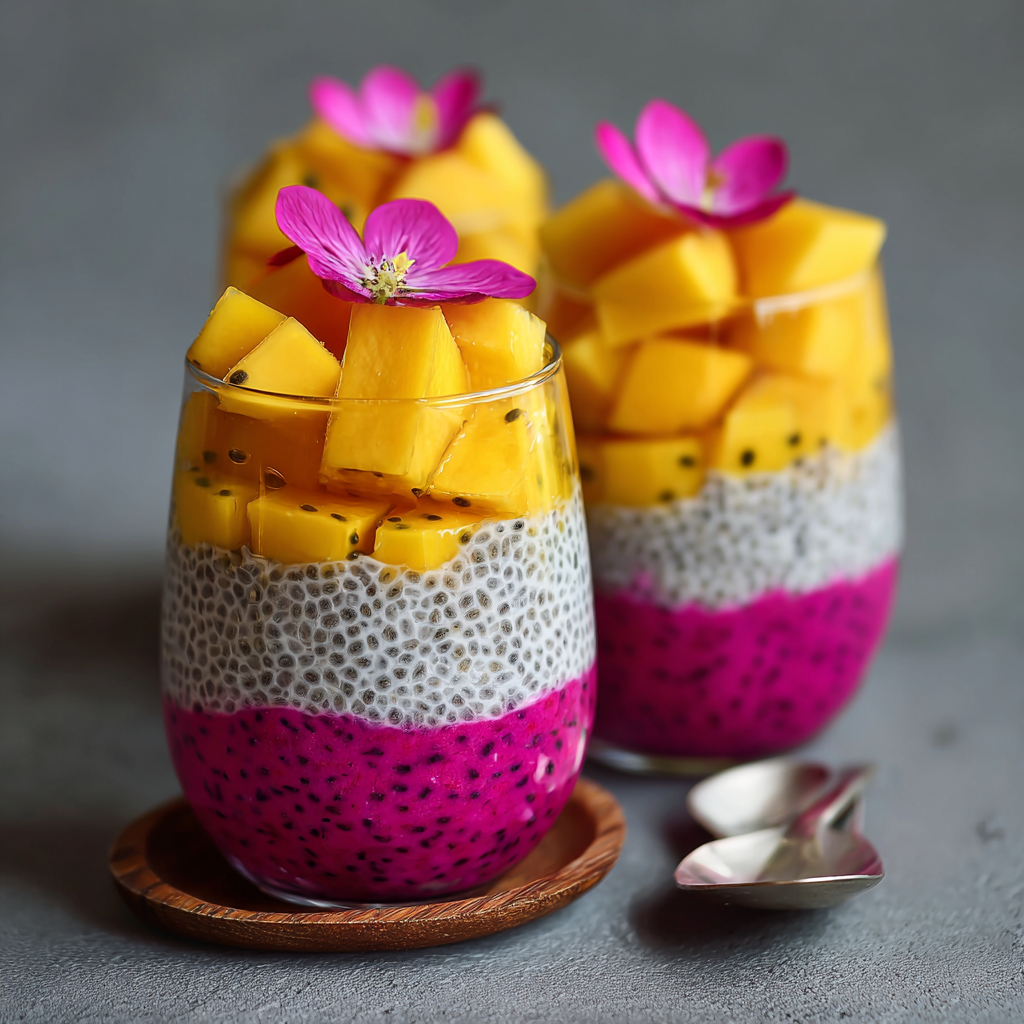
This Mango and Dragon Fruit Chia Pudding is not just a visually stunning breakfast; it is a nutritional powerhouse designed to fuel your morning. By layering the sweet, creamy richness of mango with the exotic, antioxidant-packed vibrancy of dragon fruit (pitaya), we create a parfait that looks like a high-end resort treat but takes less than 15 minutes to prep. In this guide, we will explore the ideal chia-to-liquid ratio, how to select the perfect dragon fruit, and why this jar of goodness is the ultimate meal-prep hack.
Ingredients List
The texture of your pudding depends entirely on your ratios. Precision is key.
The Chia Base
- Chia Seeds (¼ cup): Black or white seeds work equally well; there is no nutritional difference.
- Coconut Milk (1 cup): Light canned coconut milk or carton beverage style.
- Texture Note: Canned milk yields a dessert-like creaminess, while carton milk creates a lighter, drinkable consistency.
- Maple Syrup or Honey (1-2 tbsp): To sweeten the base.
- Vanilla Extract (½ tsp): Adds depth.
The Tropical Layers
- Mango (1 cup, cubed): Fresh is best. Look for Champagne or Ataulfo mangoes for a butter-smooth texture without fibers.
- Dragon Fruit / Pitaya (1 cup, cubed or balled):
- Selection Tip: Red-fleshed dragon fruit is sweeter and contains more antioxidants (betalains) than the white-fleshed variety, plus it provides that shocking pink color. If you can only find white, it still tastes refreshing (like a kiwi-pear hybrid).
- Lime Juice (1 tsp): A squeeze over the fruit prevents oxidation and makes the flavors pop.
Optional Crunch
- Toasted Coconut Flakes: Mirrors the milk base.
- Hemp Hearts: For an extra protein boost.
Timing
This is a “set it and forget it” recipe.
- Preparation Time: 15 minutes.
- Setting Time: 4 hours (or overnight).
- Total Time: Approx. 4 hours 15 minutes.
Data Insight: By preparing this the night before (Overnight Oats style), you save approximately 15-20 minutes of morning routine time, reducing decision fatigue and ensuring a nutrient-dense start to the day.
Step-by-Step Instructions
Step 1: The Ratio Mix
In a jar or bowl, whisk together the chia seeds, coconut milk, maple syrup, and vanilla.
- The “Double Whisk”: Whisk once to combine. Let it sit for 5 minutes. Whisk again.
- Why? Chia seeds tend to sink to the bottom immediately. The second whisk ensures they are suspended in the liquid as they start to gel, preventing a solid clump of seeds at the bottom of the jar.
Step 2: The Chill
Cover the jar and refrigerate for at least 4 hours, or ideally overnight. The mixture should thicken to a texture similar to tapioca pudding.
Step 3: Fruit Prep
While the pudding sets (or right before serving), peel and cube the mango and dragon fruit. Toss the fruit gently with the lime juice.
- Puree Option: For a layered look, blend half the mango into a puree.
Step 4: The Assembly
Layer 1: Spoon the thickened chia pudding into serving glasses.
Layer 2: Pour the mango puree (if using) or add a layer of mango cubes.
Layer 3: Top with the vibrant dragon fruit cubes.
Garnish: Sprinkle with toasted coconut flakes or hemp seeds for crunch.
Nutritional Information
This breakfast punches above its weight class in fiber and healthy fats. Breakdown per serving (based on 2 servings):
| Nutrient | Amount per Serving | Daily Value % |
| Calories | ~280 kcal | 14% |
| Fiber | 11g | 44% |
| Protein | 6g | 12% |
| Healthy Fats | 12g | 18% |
| Omega-3s | 2,500mg | >100% |
| Vitamin C | High | 80% |
- Data Insight: A single serving provides nearly half of your daily fiber requirement. High-fiber diets are statistically linked to lower cholesterol levels and improved blood sugar control.
Healthier Alternatives for the Recipe
Adapt Mango and Dragon Fruit Chia Pudding to your specific needs:
- Lower Sugar: Omit the maple syrup entirely. If your mango is ripe enough, it will sweeten the dish naturally. Use a drop of liquid stevia if needed.
- Protein Boost: Stir a scoop of unflavored or vanilla Collagen Peptides or protein powder into the coconut milk during Step 1. You may need to add an extra splash of liquid as protein powder absorbs moisture.
- Low Fat: Swap coconut milk for unsweetened Almond Milk or Oat Milk. This reduces the calorie density significantly but results in a thinner pudding.
- Keto-Friendly: Replace the tropical fruits (which are higher in sugar) with Raspberries and Blackberries, and use full-fat canned coconut milk with a keto-approved sweetener.
Serving Suggestions
Make it a brunch centerpiece:
- The Parfait: Layer granola between the pudding and fruit for added texture.
- Smoothie Bowl Base: Pour the pudding into a bowl and arrange the fruit in rows (the “Instagram style”) with nuts and seeds.
- Dessert Swap: This is sweet enough to serve as a healthy dessert. Top with a dollop of whipped coconut cream and a mint leaf.
- Warm Weather Treat: Freeze the fruit chunks before adding them for a frosty, refreshing contrast to the creamy pudding.
Common Mistakes to Avoid
Here is why your chia pudding might fail:
- The “Cement” Texture: If you use too many seeds and not enough milk, it becomes a solid block. The golden ratio is roughly 1 tablespoon seeds to ¼ cup liquid.
- The “Soup” Texture: Conversely, too much liquid means it won’t set. If your pudding is runny after 4 hours, simply stir in another teaspoon of seeds and wait 30 minutes.
- Clumping: Skipping the second whisk (Step 1) is the #1 error. Seeds clump together and remain crunchy in the center while the outside gels.
- Unripe Fruit: Since this is a raw dish, using hard, unripe mango or dragon fruit ruins the experience. Ensure they give slightly to the touch.
Storing Tips for the Recipe
Chia pudding is the ultimate meal prep champion.
- Refrigerator: The base chia pudding (without fruit) keeps in an airtight container for up to 5 days.
- Pro Tip: Store the fruit separately and add it fresh each morning to prevent the fruit juices from making the pudding watery.
- Freezing: You cannot freeze the assembled dish (the fruit texture gets weird), but you can freeze the chia pudding base? Technically yes, but fresh is much better.
- On-the-Go: Build these in mason jars with lids. They travel perfectly in a lunch bag.
Conclusion
Mango and Dragon Fruit Chia Pudding is a vibrant, tropical escape in a jar. It proves that “fast food” can be whole food, offering a massive dose of Omega-3s and fiber with zero cooking required. It’s creamy, crunchy, sweet, and tart—a symphony of textures that wakes up your palate.
Ready to glow from the inside out? Grab a jar and get whisking! If you try this recipe, please leave a 5-star rating below. Don’t forget to subscribe for more superfood breakfast ideas.
FAQs
Can I use frozen fruit?
Yes! Frozen mango and dragon fruit (often sold in smoothie packs) work great. Let them thaw in the fridge overnight right on top of the pudding. The juices they release will create a delicious syrup layer.
What if I don’t like the texture of chia seeds?
If the “frog spawn” texture bothers you, simply blend the mixture in a high-speed blender after it has set. This creates a completely smooth, mousse-like consistency similar to chocolate pudding.
Is dragon fruit expensive?
It can be, depending on the season and location. If fresh dragon fruit is out of budget or unavailable, kiwi is an excellent, lower-cost substitute with a similar texture and seed crunch.
Can I use dairy milk?
Yes, cow’s milk works perfectly fine. The gelling process is caused by the seed reacting with liquid, regardless of the liquid type.
How do I know if my dragon fruit is ripe?
Look for bright, even-colored skin. Press it gently with your thumb; it should give slightly, like a ripe avocado or peach. If it’s rock hard, let it ripen on the counter for a few days.