Follow Me On Social Media!

The Ultimate Chocolate Chip and Toffee Shortbread Cookies


Introduction
Did you know that traditional Scottish shortbread relies on a specific “1-2-3” ratio? That is one part sugar, two parts butter, and three parts flour. It is a formula that has worked for centuries to create a cookie that doesn’t just crumble—it melts.
This recipe for Chocolate Chip and Toffee Shortbread takes that classic, buttery canvas and transforms it into a texture masterpiece. We are adding the sticky, caramelized crunch of English toffee (think Heath bar bits) and the smooth richness of semi-sweet chocolate. Unlike standard drop cookies, these are baked in a pan and sliced into elegant fingers or squares. The result is a dense, “sandy” texture that dissolves on the tongue, leaving behind a sweet, buttery finish that pairs perfectly with coffee or tea.
Ingredients List

Shortbread has nowhere to hide. With no eggs or leavening agents, the quality of your butter is the single most important variable.
The Shortbread Base
- 1 cup (2 sticks) Unsalted Butter: Softened to cool room temperature (65°F).
- Pro Tip: Use a high-fat European style butter (like Kerrygold or Plugrá) for a richer flavor and yellower color.
- ¾ cup Powdered Sugar (Confectioners’ Sugar):
- Why? Granulated sugar creates a crisp, crunchy cookie. Powdered sugar contains a tiny amount of cornstarch, which creates that signature “melt-in-your-mouth” tenderness.1
- 2 cups All-Purpose Flour: Spooned and leveled.
- 1 tsp Vanilla Extract: Pure vanilla is essential here.
- ½ tsp Fine Sea Salt: Essential to cut the richness of the butter.
The Mix-Ins
- ¾ cup Toffee Bits: You can buy bags of “Heath Bits o’ Brickle” in the baking aisle, or smash up 3-4 full-sized Heath/Skor bars.
- ½ cup Mini Chocolate Chips:
- The Logic: Regular chocolate chips are too bulky for dense shortbread and can cause the cookie to crack when slicing. Mini chips distribute evenly and keep the structural integrity intact.
Sensory Note: The dough will feel stiff and dry compared to regular cookie dough. This is normal! Do not add milk or water, or you will lose the flaky texture.
Timing
Shortbread is a “low and slow” baking project.2
- Preparation Time: 15 minutes
- Baking Time: 30–35 minutes
- Cooling/Slicing Time: 1 hour
- Total Time: ~1 hour 50 minutes
Data Insight: Shortbread baked at a lower temperature (325°F) ensures the center cooks through without the edges burning. If baked at the standard 350°F, the high sugar/butter content often causes the edges to darken too quickly while the middle remains raw.
Step-by-Step Instructions
Step 1: The Creaming (Gentle Approach)
Preheat your oven to 325°F (165°C). Lightly grease an 8×8 or 9×9 inch square baking pan.
- In a large bowl or stand mixer, beat the butter, powdered sugar, vanilla, and salt on medium speed for 2 minutes.
- Texture Goal: You want it smooth and combined, but do not beat it until it’s white and fluffy like a cake. Too much air creates air pockets that make shortbread fragile.
Step 2: The Dry Mix
Turn the mixer to low. Add the flour.
- Mix just until the dough starts to clump together. It will look crumbly at first, then suddenly start to clean the sides of the bowl.
- Stop mixing as soon as the white flour disappears.
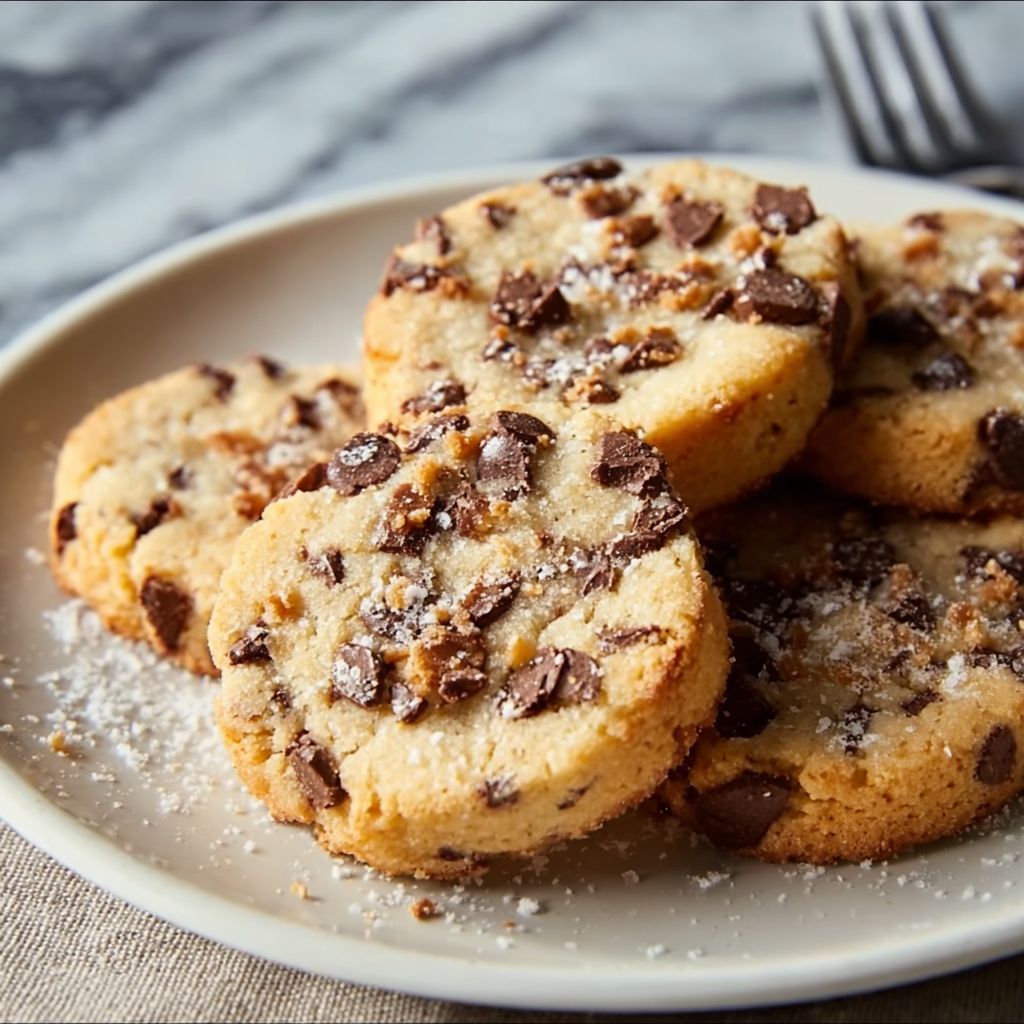
Step 3: The Add-Ins
Add the toffee bits and mini chocolate chips.
- Use a sturdy spatula or your hands to knead them gently into the dough. The warmth of your hands helps bring the dough together.
Step 4: The Press
Dump the crumbly dough into the prepared pan.
- Technique: Use the bottom of a measuring cup or glass to press the dough firmly and evenly into the corners. The tighter you pack it, the better it will slice later.
- Docking: Use a fork to prick holes all over the surface. This allows steam to escape so the shortbread bakes flat rather than puffing up.
Step 5: Bake
Bake for 30 to 35 minutes.
- Doneness Test: The top should look dry and pale golden, and the edges should be a light golden brown. It should not be dark brown!
Step 6: The “Warm Cut” (Critical Step)
Remove the pan from the oven.
- Wait exactly 5 minutes.
- While the shortbread is still warm and soft, use a sharp knife to slice it into rectangles or squares inside the pan.
- Why? If you wait until it cools completely, the shortbread hardens and will shatter/crumble when you try to cut it.
- Let the cookies cool completely in the pan before removing them.
Nutritional Information
This is a calorie-dense treat due to the butter content. Below is the estimated breakdown per piece (yields 16 squares).
| Nutrient | Amount per Serving | % Daily Value* |
| Calories | 240 kcal | 12% |
| Total Fat | 14g | 21% |
| Saturated Fat | 9g | 45% |
| Carbohydrates | 26g | 9% |
| Sugars | 14g | – |
| Protein | 2g | 4% |
Variations for the Recipe
- The “Slice and Bake” Log: If you prefer round cookies, shape the dough into a log, wrap in plastic, chill for 2 hours, slice, and bake on a sheet pan for 12-14 minutes. (Note: Toffee bits can drag and tear the dough when slicing raw logs, so use a very sharp knife).
- Espresso Toffee: Add 1 tsp of instant espresso powder to the butter mixture. Coffee enhances the toffee flavor beautifully.
- Pecan Crunch: Substitute half of the toffee bits for finely chopped toasted pecans for a nuttier profile.
- Sea Salt Finish: Sprinkle flaky sea salt (Maldon) over the top immediately after taking the pan out of the oven.
Serving Suggestions
- The Dip: Dip half of the finished cookie finger into melted dark chocolate for a tuxedo look.
- Beverage Pairing: These are sturdy “dunking” cookies. Serve with black coffee or an Irish Breakfast Tea.
- Gifting: Because shortbread has a long shelf life and travels well, these are the ultimate cookie tin filler for the holidays.
Common Mistakes to Avoid
- Cutting When Cold:
- The Issue: Waiting an hour to slice the pan.
- The Result: A pan of crumbs and broken shards.
- The Fix: Slice while warm (5-10 mins out of the oven).
- Using Granulated Sugar:
- The Issue: Swapping powdered for white sugar.
- The Result: A gritty, harder cookie. It will still taste good, but you lose the “melt.”
- The Fix: Stick to powdered sugar.
- Overworking the Dough:
- The Issue: Kneading it like bread.
- The Result: Tough, chewy shortbread.
- The Fix: Handle it as little as possible once the flour is added.
Storing Tips for the Recipe
- Room Temperature: Store in an airtight container or cookie tin for up to 1 week. The flavor actually improves after Day 1 as the butter settles.
- Freezing:
- Baked: Freeze fully cooled cookies for up to 3 months.
- Dough: Freeze the pressed dough in the pan (unbaked) or as a log. Bake directly from frozen (add 2-3 minutes to bake time).
Conclusion
Chocolate Chip and Toffee Shortbread is the kind of recipe that feels sophisticated but is secretly simple. It requires no rolling pins, no cookie cutters, and no chilling time. By pressing it into a pan, you ensure a perfect, dense texture every time. The combination of the buttery crumb, the sticky toffee, and the chocolate is a texture trifecta that is impossible to eat just one of.
Ready to bake? Soften that butter! If you try this recipe, please leave a star rating below and let us know: did you dip yours in extra chocolate? Don’t forget to subscribe to our newsletter for more buttery baking secrets.
FAQs
Q: Can I use salted butter?
A: Yes. If you use salted butter, simply omit the added ½ tsp of salt in the recipe.
Q: Why is my shortbread crumbly?
A: Usually, this means the ratio of flour to butter was off (too much flour). Be sure to spoon your flour into the cup and level it off, rather than scooping directly from the bag (which packs the flour down).
Q: Can I use almond flour?
A: You can substitute up to ¼ cup of the all-purpose flour with almond flour for a nuttier taste, but do not replace all of it, or the cookies will not hold together.